

“Nostalgic hobbies aren’t a sign of immaturity. Psychological research links nostalgia to reduced loneliness, a stronger sense of meaning, and better emotional regulation in adults. Here are six evidence-backed reasons to keep the things you loved as a child.”
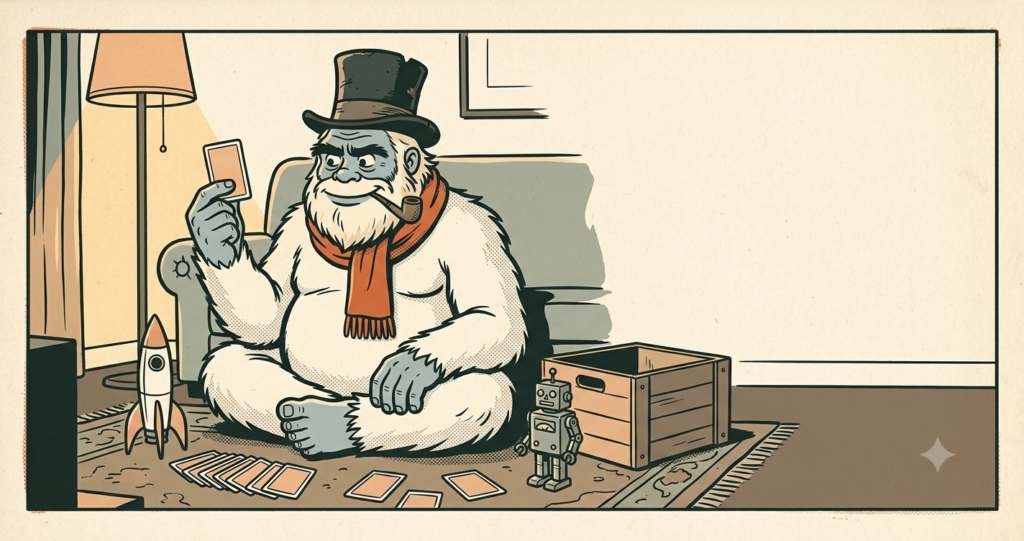
Nostalgic hobbies are not a sign of arrested development. Across six psychology studies of 4,388 adults, recalling a nostalgic memory raised happiness, reduced loneliness and strengthened people’s sense that their life had meaning. The effects are modest and they are real. Here is what the research actually found — and where it stops.
Key Takeaways
- Six studies of 4,388 adults in the UK, US and China found nostalgic recall raised happiness and offset loneliness; with a reminder, the effect held for two days.
- Deloitte’s 2026 survey of 22,595 people across 44 countries found 48% of Gen Z and 45% of millennials burned out, and 58% reporting digital fatigue.
- 71% of Gen Z said they needed time off for stress. Only 41% took it.
- Adults are not a fringe of the toy market. Circana reports buyers aged 15+ account for nearly 20% of global toy sales, with spending more than doubling since 2020.
- Nostalgia’s benefits run through self-continuity — the sense of being the same person across time — which supports self-esteem and meaning in life.
- The effect is not unconditional. In a study of 190 Syrian refugees, nostalgia raised self-esteem and meaning but lowered optimism among less resilient participants.
- Varied nostalgic memories work better than repeatedly revisiting the same one.
If there is one thing every person in their 30s and 20s hates to hear, it’s the line “Grow up!”, especially if you are someone who enjoys doing something remotely nostalgic.
Sure, people are now more open about peculiar or not-so-mainstream hobbies and pastimes. But as soon as an adult has a HotWheels collection or God forbid, Pokémon cards, people feel the need to jump in and voice their opinion.
And the worst part is the “Grow up!” advice can come from anyone. It can be a girl/boyfriend, a wife, a husband, a parent, or even a colleague.
Who decides what is childish or when a grown-up should stop watching cartoons and anime?
Why is it anyone’s business what you do with your spare time?
Well. We can’t answer those questions for them. But we can tell you what the research actually says — and it is a good deal more interesting than “it’s fine, you do you”.
Is Nostalgia Actually Good for Your Mental Health?
Yes, measurably. Across six studies of 4,388 people in the UK, US and China, psychologists at the University of Southampton found that recalling a nostalgic memory raised happiness and reduced the sting of loneliness — and with a brief reminder, the lift was still detectable two days later. The effects are modest but real, and they replicate.
The research here is better than you would expect for something that sounds this soft.
The paper doing most of the heavy lifting is by Xinyue Zhou, Constantine Sedikides and Tim Wildschut — Sedikides and Wildschut run the nostalgia research group at the University of Southampton, and between them they have spent two decades measuring this stuff properly, with control conditions and everything.
Their 2022 paper in Social Psychological and Personality Science ran six studies. Three surveys covering 3,721 people across the UK, the US and China during pandemic lockdowns. Then three experiments where they deliberately triggered nostalgic recall. 4,388 participants in total.
What they found: people who revisited a nostalgic memory reported measurably higher happiness than those who recalled an ordinary one. Lonely people turned out to be more nostalgic, and that nostalgia then raised their happiness — partially offsetting the drop the loneliness had caused. And with a short reminder a day or two later, the lift held.
Their conclusion, in their own words, is that nostalgia is a psychological resource that can be harnessed. Not a symptom to be managed.
Which, functionally, is what your hobby already is.
Why Do Adults Still Collect Toys?
Because collecting activates the same dopamine-driven reward pathway that drives all goal-seeking behaviour, and because possessions genuinely form part of how people define themselves. The pursuit matters more than the object. It is also no longer unusual: Circana reports that buyers aged 15 and over now account for nearly 20% of global toy sales, with their spending more than doubling since 2020.
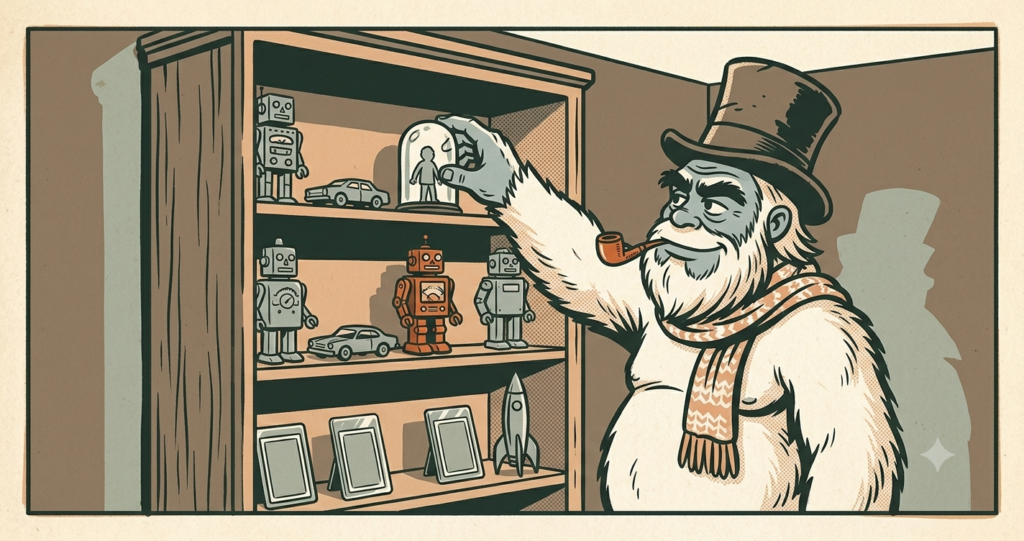
Start with the fact that you are not unusual. Circana’s 2026 global toy report puts buyers aged 15 and over at nearly a fifth of all toy sales worldwide, with spending in that group more than doubling since 2020. The global toy market is worth $123 billion and grew 8% in 2025 — and in developed markets, teenagers and adults are responsible for most of that growth.
There is an industry term for you now. You are a kidult, which is an ugly word for a fairly ordinary thing.
As for why — there are two mechanisms worth knowing about, and they explain almost everything about how a collection feels from the inside.
The dopamine and mesolimbic reward loop
Looked at neurologically, collectors are chasing the thrill of the chase rather than the object itself. The mesolimbic reward pathway is the neural circuit in charge of driving motivation and learning through the release of dopamine — and, crucially, it fires hardest in anticipation rather than on arrival.
This is why the hunt for the card so often feels better than owning the card. It is also why the sealed box you never opened is a warning sign rather than a trophy, but we will come back to that.
Belk’s extended self
The second mechanism is Russell Belk’s 1988 research on the extended self, published in the Journal of Consumer Research and still one of the most cited papers in the field. Belk’s argument is that humans have a natural tendency to use material possessions to define and anchor their identities. We are, in part, what we keep.
Put those two together and it is not difficult to understand why adults still collect toys, or why the number of adults doing it keeps going up. A collection is a self-portrait that you assembled slowly, on purpose, out of things that meant something.
Collecting Pokémon trading cards or Dragon Ball action figures may still seem childish to some. You probably have that one annoying friend or family member who never fails to make fun of this harmless hobby of yours.
“Why do you still buy this stuff? You are in your 30s!”
You probably laugh it off or internally scream, “Well, why don’t you fuck right off in your 30s!?”
The fact is that you don’t collect Star Trek action figures or a fully electronic Iron Man mask because you are immature, but simply because you want cool stuff. If anything, you are more mature than your peers about the things you enjoy, and about reclaiming your true self despite the constant societal pressures.
Can Nostalgia Help You Stop Overthinking?
It can, with one condition. Nostalgic media use during the COVID-19 pandemic was associated with better wellbeing in research by Wulf, Breuer and Schmitt — but only when it worked as a resource rather than an escape. Used as avoidance, the same behaviour predicts worse outcomes. The difference is whether you return to the present afterwards.
The study is Escaping the Pandemic Present, by Tim Wulf, Johannes Breuer and Josephine Schmitt, published in Psychology of Popular Media in 2021. Their finding was that during a crisis, people are especially motivated to consume nostalgia-inducing media — and that this is broadly good for them, right up until it isn’t.
Because holding onto nostalgia becomes a double-edged sword the moment you stop using it as inspiration and start using it as an exit. Taking strength, and even borrowing happiness, from your past is perfectly okay. Letting it consume you is a path you don’t want to start down.
With the pressures of life weighing on you every day, it is already challenging to keep your mind sane. Every one of us overthinks. For some of us it is the pressures of parenthood and marriage, for others it is the aging of our parents, and for some it’s both and maybe more.
So the next time you find yourself replaying Pokémon FireRed for the nth time, or YouTubing clips from Johnny Bravo, give yourself some credit.
At the very least, your escape from reality does not involve intoxicating yourself to the point that you lose sight of yourself.
Does Nostalgia Help With Burnout?
It will not fix burnout, and nothing in the research claims it does. What it offers is a low-cost form of recovery for people who are not getting any. In Deloitte’s 2026 survey of 22,595 people across 44 countries, 48% of Gen Z and 45% of millennials reported burnout, and 58% reported digital fatigue specifically — the condition a quiet, analogue, notification-free hobby happens to target.
The burnout generation — it’s the name coined for millennials by Anne Helen Petersen, a BuzzFeed culture writer, back in 2019. Seven years later, nobody is seriously arguing with her.
What the 2026 Deloitte numbers actually show
Today, in 2026, burnout is close to a baseline condition, and the numbers say so. Deloitte’s 2026 Gen Z and Millennial Survey ran from November 2025 to January 2026 and covered 22,595 people across 44 countries. Here is what it found.
What Gen Z and millennials report — Deloitte 2026 (n = 22,595, 44 countries)
| Measure | Gen Z | Millennials |
| Feel burned out | 48% | 45% |
| Needed time off due to stress | 71% | 63% |
| Actually took the time off | 41% | 35% |
| Gave employer a different reason | 21% | 17% |
| Report digital fatigue | 58% | 54% |
| Anxious or stressed most/all of the time | 34% | 30% |
| Long-term financial future as top stressor | 44% | 39% |
| Delayed a major life decision over money | 55% | 52% |
Read the third and fourth rows together, because that is the whole story. 71% of Gen Z needed time off because of stress. 41% took it. And of those who did, one in five told their employer something else.
That’s not a burnout problem. That’s a permission problem.
There’s a specific modern flavour of this too: 58% of Gen Z and 54% of millennials report digital fatigue — the constant alerts, the tool-switching, the low hum of six open tabs. Which goes some way to explaining why grown adults are spending three hours on a plastic brick set that does exactly one thing and never notifies you about anything.
Separately, 34% of Gen Z and 30% of millennials report feeling anxious or stressed most or all of the time. Nostalgic hobbies won’t fix the conditions causing that, but the research suggests they do something measurable for how you carry it.
And look at what’s actually driving it. When Deloitte asked what contributes most to stress, the top answers weren’t laziness or screen time. They were long-term financial futures (44% of Gen Z, 39% of millennials), the health and welfare of family, and day-to-day finances.
Cost of living has been the number one concern for five consecutive years. More than half of both generations — 55% and 52% — say they’ve delayed major life decisions like marriage, starting a family or starting a business because of money. For God’s sake, every one of us knows at least one person who has practically given up on building a family despite very much wanting one, for the very real reason of money.
So when someone tells you to grow up, ask what exactly they think you’re avoiding.
Can Childhood Hobbies Reduce Loneliness?
Yes, and the mechanism is indirect. Zhou and colleagues found that lonely people become more nostalgic, and that nostalgia then raises happiness — partially offsetting the drop loneliness causes. A shared hobby adds a second route by supplying actual social contact. The research frames nostalgia as a psychological resource to be used, not a symptom to be managed.
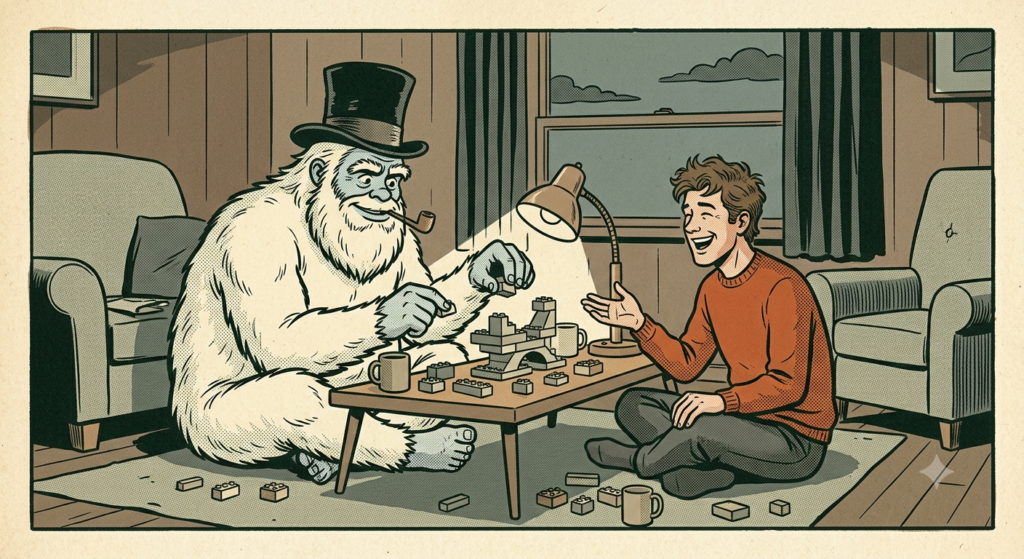
They say living in the past and focusing too much on the future is a recipe for disaster. While we do not condone dreaming your life away, reigniting your childhood hobbies — or the dreams you never chased — could help you combat loneliness.
The six-study paper above is the strongest evidence for this. The three survey studies found that the lonelier people were, the more nostalgic they became, and the more nostalgic they became, the happier they reported being. The three experiments then showed this worked causally: people who were prompted to revisit a nostalgic memory came away measurably happier than people prompted to recall an ordinary one.
But life as an adult can be lonely sometimes, especially if you are unapologetically happy with what others may consider trivial or childish hobbies. So it is upon us to take the stigma out of adults buying Hot Wheels that give them a glimpse of their past selves, and to recreate those moments of joy without fear of judgement.
So the next time someone tells you they want to build that 3,803-piece Death Star LEGO, or buy that ridiculously expensive Transformer that can actually fucking transform — just be happy for them, as you would want them to be happy for you.
How Does Play Improve Emotional Regulation?
Absorbing, low-stakes play engages the brain’s default mode network, the system active during rest and self-reflection, which supports emotional processing. Complex building tasks like LEGO and Gunpla add a second effect: a problem with a definite solution, in a session you control, which is the opposite of most adult stress.
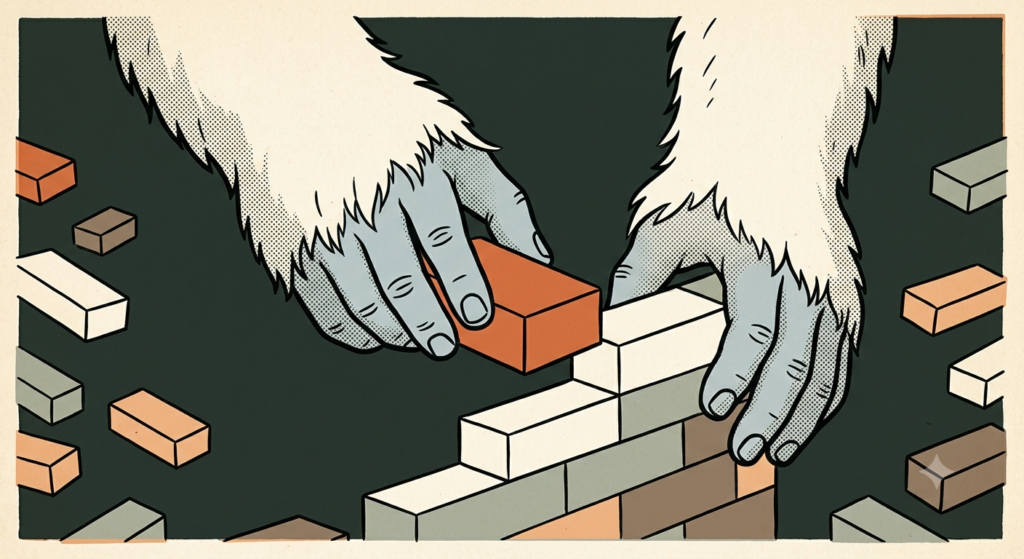
Any activity that draws on nostalgia or the feel of something familiar — even just daydreaming while listening to music — can activate the brain’s default mode network. That’s the network that comes online when you stop actively concentrating, and it does a lot of the quiet work of processing what has happened to you.
Why LEGO works as a stress tool
It is no wonder that many adults now use complex puzzles, LEGO and Gunpla included, to de-stress. Researchers at the University of Arizona have discussed LEGO’s role in building flexible and creative mindsets in adults, and the appeal is not complicated: it is a problem with a definite solution, on a timescale you control, with an instruction booklet. Name one other part of adult life that offers that.
Of course, these games will stress you out now and then. The piece will be missing, or the step will be wrong, or the thing will not click. But that also provides an opportunity to practise emotional regulation on something where the stakes are zero.
Even though you may not realise it, these childish games are helping you “grow up” more than sitting through a French film pretending to enjoy it.
Does Child-like Curiosity Help You Grow as an Adult?
Yes — and this is where nostalgia stops being consolation and starts being useful. Positive autobiographical memories reinforce self-worth and self-continuity, the sense that you are the same person over time. Sedikides and Wildschut describe this as nostalgia’s meaning-making function: it helps people read their own life as coherent rather than accidental.
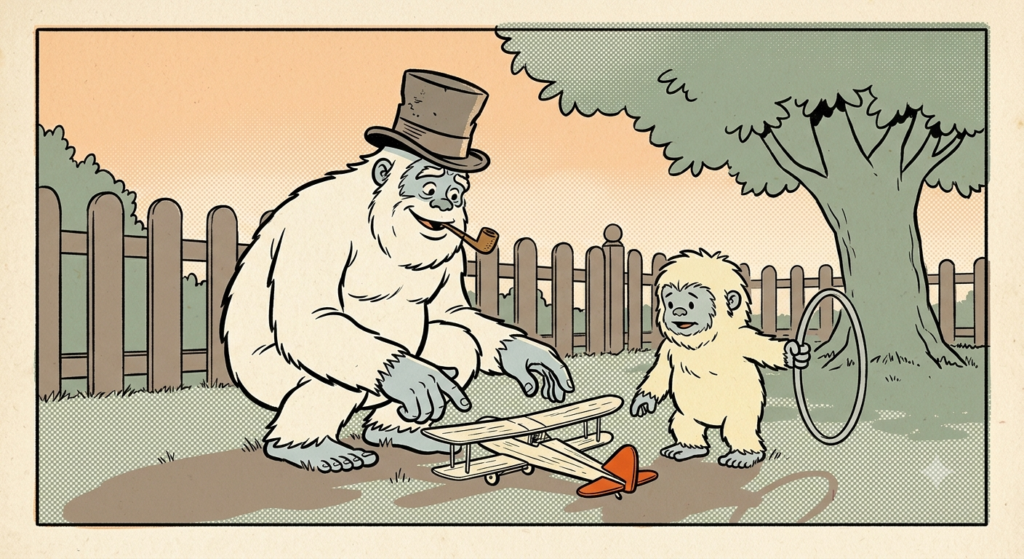
One of the best things about the psychology of nostalgia is that it helps you grow into a better person, if you are willing to make the effort. Adults who take up puzzle-building hobbies like LEGO or Gunpla are more likely to keep acquiring new skills and to work at their problem-solving.
You can also use it as a parent, or an uncle or aunt, to connect with a young one. Imagine sharing a hobby with the little ones you love — not only do you get to spend the time, you get to make memories that could last a lifetime.
Remember that time you wanted to build a model aeroplane and fly it through a hoop? Well, it is never too late for that. You even have your mini servant to hold up the hoop or fetch the plane when you need it.
The first serious LEGO set I built as an adult was the Tumbler — the Batmobile from Bale’s Batman, a little over three thousand pieces. My mini servant wasn’t a niece or a nephew; it was my girlfriend. It took days and days, and it was worth every one of them.
And as you build this new relationship with a child or a significant other, you are simultaneously building up your own self-esteem. Positive memories help reinforce self-worth — what Sedikides and Wildschut call self-continuity, the sense of being recognisably the same person across a life. It helps us find the meaning in the life we have actually lived, rather than the one we meant to.
When Nostalgia Stops Helping
Everything above comes with a limit, and the research is clearer about it than most articles on this subject will admit.
The most instructive study here is Hanin, by Wildschut, Sedikides and Alowidy, published in the European Journal of Social Psychology in 2019. They worked with 190 adult Syrian refugees living in Riyadh. Nostalgic recall raised self-esteem, meaning in life and social connectedness — which is remarkable on its own, given what those participants had lived through.
But it also lowered optimism. And the whole pattern was moderated by resilience: the more resilient participants got the benefits and avoided the costs, while the less resilient ones saw their optimism fall. Nostalgia is bittersweet by design — participants reported genuinely mixed feelings — and that mixture is part of the mechanism, not a flaw in it.
Which gives you a practical test, and it is a simple one. Does the hobby return you to the present, or replace it?
The warning signs are not the hobby itself. They are spending you cannot afford. A collection that has quietly become an obligation. The sealed box you will never open, bought for a version of you that doesn’t exist. Using the thing to avoid a decision rather than to recover from one.
One more finding worth carrying: the same six-study paper found that the benefit holds better when you draw on different memories rather than replaying the same one. Nostalgia works like a varied diet, not a single comfort food.
When I say make your inner child happy, it is not an excuse for anything, or an encouragement to live in the past. Adult responsibilities are very real and you must face them regardless of what life throws at you.
The point is to treat nostalgia, and the things you loved doing, as a resource for strength to move forward — and, above everything, as a space to breathe and be yourself unapologetically.
FAQ
Is it normal for adults to still like childish things?
Yes, and it is increasingly common. Circana reports that buyers aged 15 and over now make up nearly 20% of global toy sales, with spending in that group more than doubling since 2020. Psychologists studying nostalgia treat attachment to childhood objects as ordinary identity maintenance, not regression.
Is nostalgia a sign of depression?
No. Nostalgia is bittersweet by design — mixed affect is part of how it works — but research consistently finds it raises mood and meaning rather than lowering them. Frequent nostalgic thinking paired with withdrawal, loss of interest or persistent low mood is worth discussing with a professional, but nostalgia itself is not a symptom.
What is the psychology behind collecting?
Two mechanisms. The mesolimbic dopamine pathway rewards pursuit rather than possession, which is why the hunt often feels better than the acquisition. And Russell Belk’s 1988 “extended self” research found people routinely use possessions to define and anchor identity. A collection is partly a self-portrait.
Can nostalgia be bad for you?
It can, when it functions as avoidance rather than recovery. In a study of 190 Syrian refugees, nostalgic recall raised self-esteem, meaning and social connectedness but reduced optimism, with the pattern strongly moderated by resilience. The practical test is whether the hobby returns you to the present or replaces it.
How does LEGO help with stress?
Absorbing construction tasks engage the default mode network and offer something adult life rarely does: a problem with a definite solution, on a timescale you control, with no notifications. Researchers at the University of Arizona have discussed LEGO’s role in building flexible and creative mindsets in adults.
What does “kidult” mean?
An adult who buys and enjoys products traditionally marketed to children — toys, games, collectibles, animation. It is an industry term rather than a clinical one, and it describes the fastest-growing segment of the global toy market.
Sources
- Zhou, X., Sedikides, C., Mo, T., Li, W., Hong, E. K., & Wildschut, T. (2022). The restorative power of nostalgia: Thwarting loneliness by raising happiness during the COVID-19 pandemic. Social Psychological and Personality Science, 13(4), 803–815.
- Wildschut, T., Sedikides, C., & Alowidy, D. (2019). Hanin: Nostalgia among Syrian refugees. European Journal of Social Psychology, 49(7), 1368–1384.
- Wulf, T., Breuer, J. S., & Schmitt, J. B. (2021). Escaping the pandemic present: The relationship between nostalgic media use, escapism, and well-being during the COVID-19 pandemic. Psychology of Popular Media.
- Belk, R. W. (1988). Possessions and the extended self. Journal of Consumer Research, 15(2), 139–168.
- Deloitte (2026). Global Gen Z and Millennial Survey 2026. 22,595 respondents across 44 countries.
- Circana (2026). Global toy market hits $123B as play expands across ages and markets.
- American Psychological Association. Nostalgia boosts well-being.
- University of Arizona. Building a flexible and creative mindset: U experts discuss LEGO’s impact on adults.
Varun · Founder, Funcle Yeti
Varun writes about nostalgia, hobbies, and the things we loved before we learned to be embarrassed about loving them. He started Funcle Yeti after noticing how many adults around him were quietly rebuilding the collections they’d given up at fifteen — and how few could explain why it helped.
He is not a psychologist. Every clinical claim on this page comes from published research, linked inline. If you spot one that’s wrong, tell him.
Illustrations generated with AI in the Funcle Yeti house style. Charts produced by Funcle Yeti from cited data.