
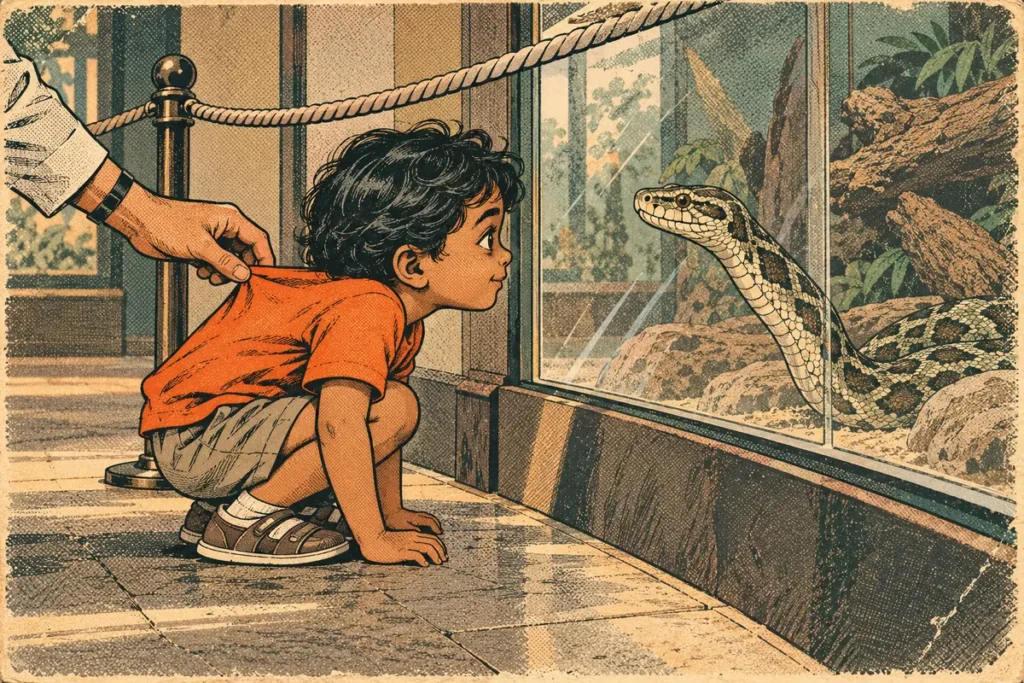
I was very little the first time I looked a big snake in the eye. It was a family trip to the zoo, and the snake section was the best part by a mile. On our way out there was one last enclosure: a big snake in a small cage, almost at ground level. The barricade in front of it was built for adults. For a kid my size, it was more of a suggestion.
So I walked under it. I wasn’t scared, not even slightly. I had watched a man in khaki shorts do this on TV more times than I could count, and he always looked like he was having the best day of his life. The snake lifted its head and looked straight at me, and for one perfect second we were just two curious creatures sizing each other up.
Then a hand grabbed me from behind. My brother or my mother, I honestly can’t remember which. What I do remember is the scolding, and how little sense it made to me. In my head, Steve would have crouched down next to me and told me exactly why she was gorgeous.
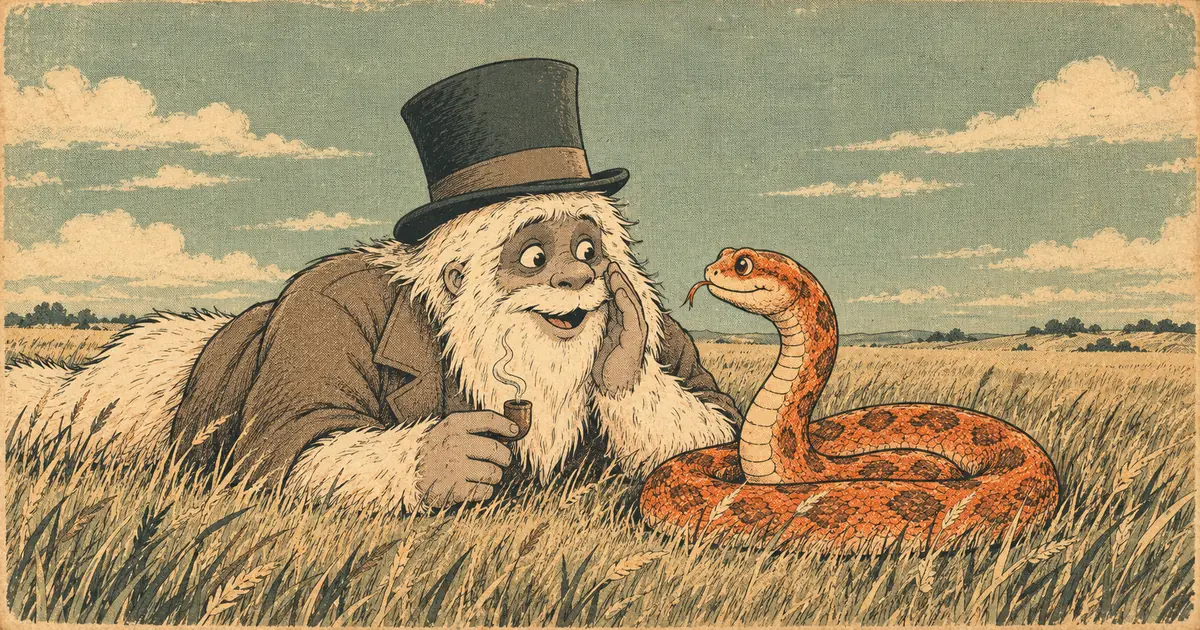
The short version: Steve Irwin, The Crocodile Hunter, was the rare grown-up on ’90s and 2000s television who loved things out loud and wanted money out loud, and never seemed embarrassed by either. To the kids watching, from Queensland to small-town Kerala, he was a kind of adult nobody else was showing us. Most of us grew up and forgot he was an option.
Who Was Steve Irwin, and Why Did a Kid in Kerala Care?
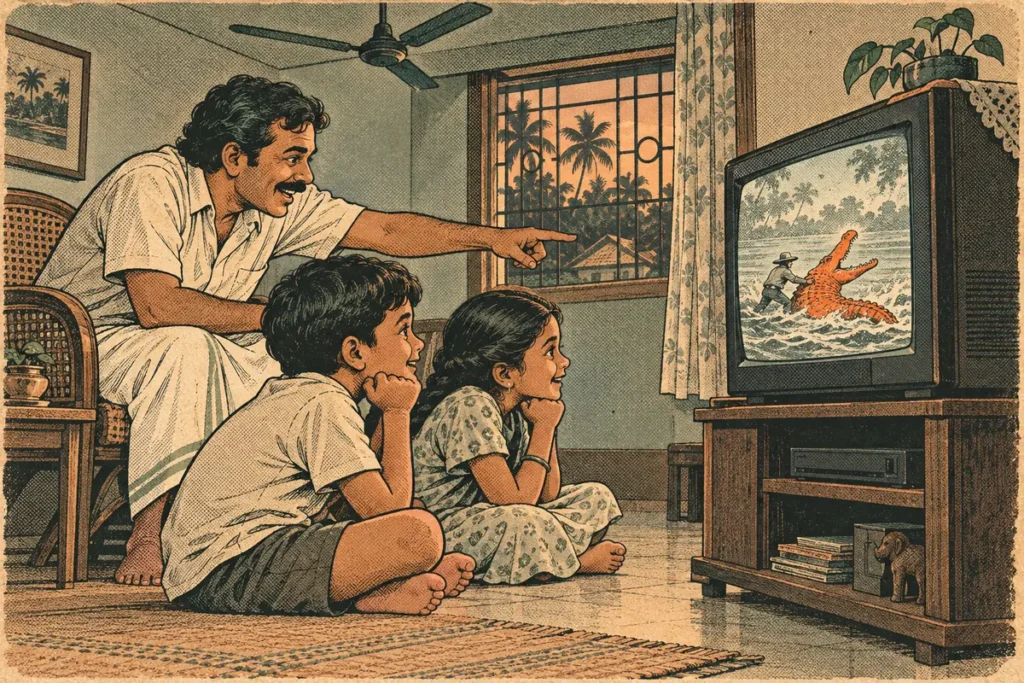
Steve Irwin (1962–2006) was an Australian wildlife expert and conservationist who ran Australia Zoo in Queensland with his wife, Terri. The Crocodile Hunter started as a pilot in 1996, ran as a series from 1997 to 2004, and became Animal Planet’s highest-rated show at the time. It was syndicated around the world. Animal Planet launched in India in March 1999, in English, years before it had a Hindi feed, and that’s how a sunburned Australian ended up in our living room.
Nobody in my house had any business caring about Queensland. We cared anyway. My parents loved him. They would point at the TV to make sure I didn’t miss whatever insane, wonderful thing he was doing, and if I got a little too cocky about my own bravery, someone would dare me to go catch a crocodile, then. For the record, I never got the chance.
The closest I came was a snake in a roadside gutter. Snakes were rare where I grew up, so this was an event. I stopped, crouched, and kicked a pebble near it to see what it would do, and a passing adult yelled at me to leave it alone. Fair enough. I was a small idiot poking a snake. But notice the pattern: every time I got close to the thing Steve loved, a grown-up showed up to pull me back.
Loud Was a Bad Word
I was a loud kid. Loud voice, loud opinions and, since we’re being honest, a mouth that swore far more than any schoolkid’s should. When an adult overheard me once and made a point of correcting it, I wanted the floor to swallow me. Looking back, they were right. That is exactly what a responsible grown-up is supposed to do.
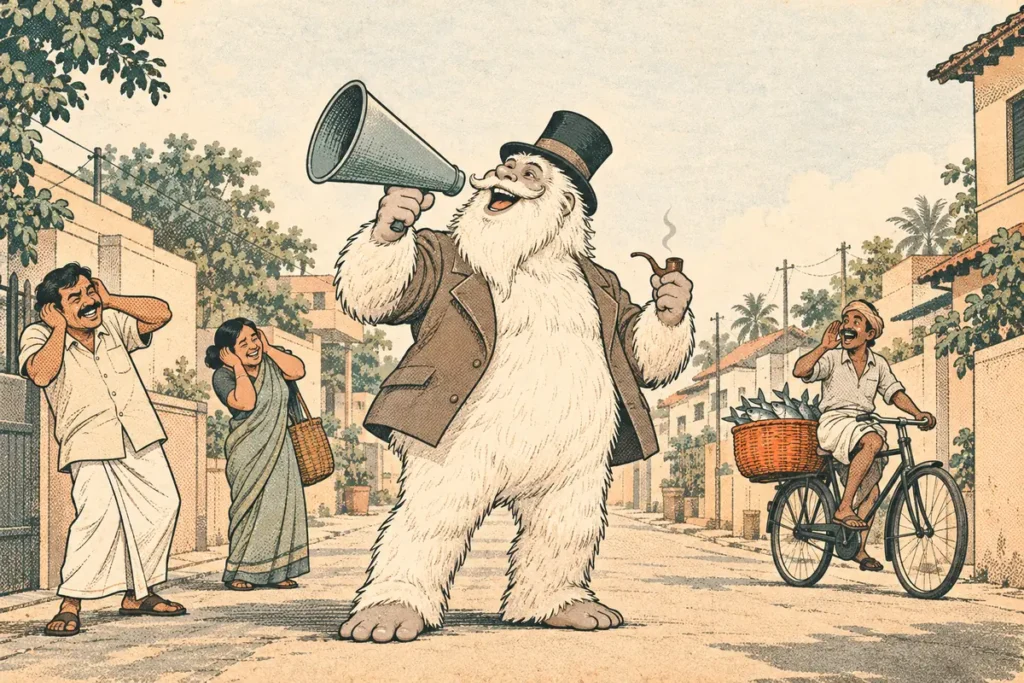
The volume got corrected too, just less kindly. Friends used to make fun of my voice, comparing me to the fish sellers who walk the roads shouting out the day’s catch. Kids are brutal like that, and it works. You turn yourself down a notch, then another, until you’re no longer sure where the dial started.
I didn’t have role models growing up, not really. There were people I thought were cool or strong, but I never wanted to be them. Mostly, the grown-ups around me taught me who not to become. The biggest lesson that I learned as a kid was that you don’t get to be an asshole to people just because you can. I took that one so seriously that I overshot it, straight into people-pleasing, which is just another way of making yourself quieter.
Here’s what I didn’t clock as a kid. Steve Irwin was the loudest man on television, and he was never an asshole. He got things wrong in public sometimes (holding his month-old son during a crocodile feeding in 2004 drew fair criticism worldwide), but cruelty was never his thing. He didn’t give a single fuck about looking cool, and he was generous with everything in front of him: the snake, the viewer, even the comedians who spent years mocking his accent and his shorts. Loud and kind. Nobody else on our screens was showing us those two could live in the same person.
“I Can’t Get Enough Money”: The Steve Irwin Clip That Says It All
In 2004, Charles Wooley sat down with Steve for Australia’s 60 Minutes, and the conversation turned to money. Most famous people do a modest little shrug at this point. Steve did not shrug. Money’s great, he said, more or less, and he couldn’t get enough of it. Did Wooley want to know what he was going to do with it? Buy wilderness. “Every single cent I get goes straight into conservation.”
He meant it. Over the years he bought large tracts of land in Australia, Vanuatu, Fiji and the United States, and treated them like his own national parks.
That clip turns up on my feed every so often, and it’s the real reason this post exists. It’s my mindset too. It just took me a long time to say so without flinching.
Why Wanting Money Loudly Isn’t Greed
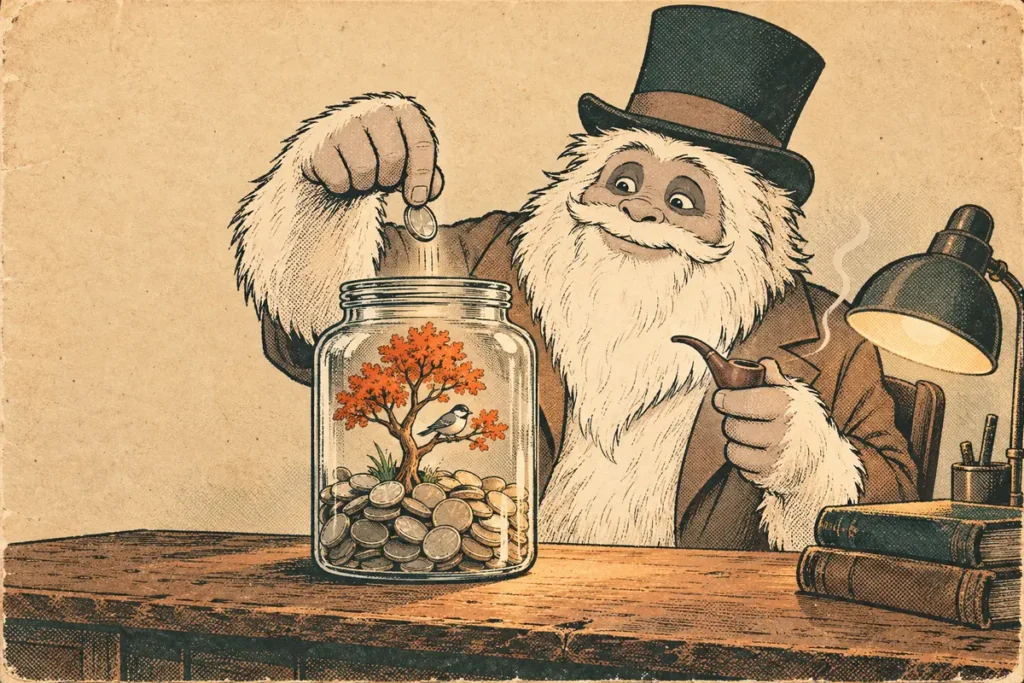
I grew up knowing money mattered, mostly because there was rarely an abundance of it. When that’s your normal, you pick up a particular skill: you dream smaller, and you get very good at being happy with what you choose. That worked fine as long as the only person I was responsible for was me. For the last five or six years I’ve lived as a digital nomad, building a life I actually like, and I made myself a deal. I had until 35 to make it financially, and I didn’t need to take money seriously until 30 or 31.
Then life moved faster than the plan. I decided to slow the role and got a place of my own, and money quietly changed category, from a want to a need. You start to notice that most families are one medical emergency away from being financially wrecked, and that dreaming small was a luxury of being responsible for nobody. So I started before my own deadline, because life was moving fast and the money wasn’t.
Here’s the thing, though. When I picture having a lot of money, I don’t picture a car. I picture abundance I get to share: buying things for the people I love without checking my balance first. And past that, a longer list. Old people who have no one. Orphans. Autistic people, including adults on the milder end of the spectrum who, in India, often can’t even get a proper diagnosis. That’s my version of buying wilderness.
Adults are taught to be embarrassed about two things: loving stuff too much, and wanting money. Steve did both at full volume, and the whole trick is that the wanting served the loving. Money was never the point. It was the fuel. The same goes for the grown-up who drops a few hundred on a Lego set. Buying back a piece of what you loved isn’t childish, and wanting the money to do it isn’t greedy.
It’s also how I think businesses should work, the ridiculously large ones most of all. Profit is fine. Profit that never reaches the people doing the work is not. Funcle Yeti is small, but it’s built on that idea. Our first jacket is made from hemp cloth handwoven in Kathmandu by women working with the bare minimum of infrastructure, and as the brand starts making money, the plan is for those benefits to reach everyone who makes it, not just me. So I’ll say it loudly: I want this to make a lot of money. I know exactly what I’d do with it.
The Day It Went Quiet
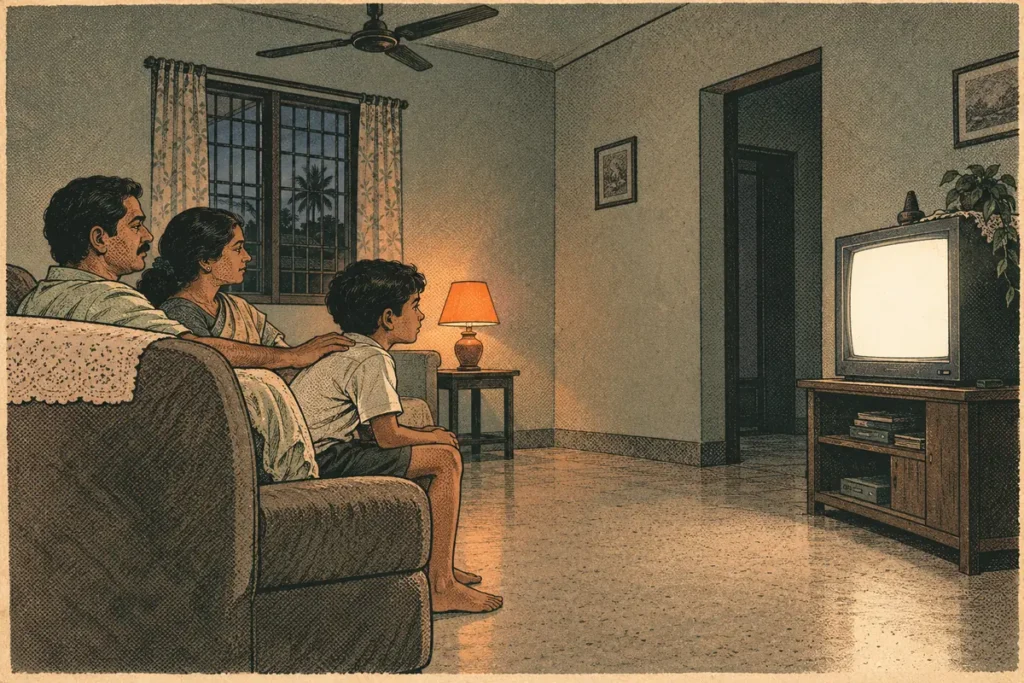
On September 4, 2006, Steve Irwin died while filming at Batt Reef, off the coast of Queensland. He was 44, and he was out in the water with the animals he loved. That’s as much as needs saying.
I was in sixth grade. I saw it on the TV news, and I didn’t tell anyone or make a big deal of it. It was a silent kind of grief, the strange sort you feel for someone you’ve only ever met through a screen, and I’m fairly sure my parents felt it too. Nobody in our house said much. Nobody needed to.
Plenty of people grieved quietly like that. His memorial was seen by an estimated 300 million people around the world. When Australia’s prime minister and Queensland’s premier offered a state funeral, the family declined, and his father said Steve would have wanted to be remembered as an “ordinary bloke.”
These days his face still turns up in my feed every few months, and it does something odd to me. It reminds me of a good time and, in the same breath, of the fact that he’s gone. Nostalgia is like that. It rarely arrives alone.
The Grown-Up We Could Still Become
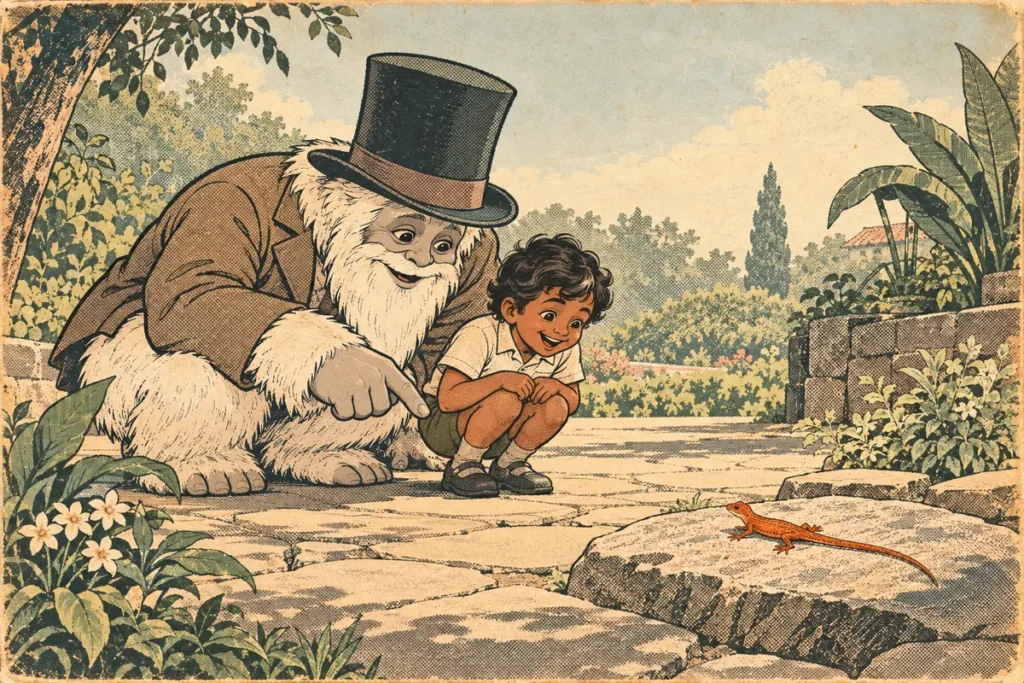
Steve wasn’t my role model. I didn’t have any. But looking back, he was the only grown-up on my screen showing me a version of adulthood I hadn’t been warned off: loud, kind, obsessed with the thing he loved, and completely unembarrassed about wanting the money to protect it.
Somewhere along the way, most of us got corrected out of being that. Some of the corrections were fair (I really did swear too much). Some of them just made us smaller. It’s the same reason we think “grow up” is advice worth ignoring, and why the heroes we leaned on as kids turned out to be more useful than anyone admitted.
So here’s the permission, from one grown-up to another. Love your thing out loud. Want the money to do it properly. Be loud about both, and don’t be an asshole about either. That’s the whole Steve Irwin school of adulthood, and as far as I can tell, enrollment is still open.
What did you get corrected out of loving? Tell someone. Loudly.
Crikey.
— The Funcle Yeti
Get the next postcard
Wish you were here.
Or at least on the list.
It’s free, and it commits you to nothing. You’ll get new letters from the archive when they’re ready, plus first word on Run One, the hemp jacket we’re making with weavers in Kathmandu.
— Funcle Yeti
Frequently Asked Questions
What did Steve Irwin say about money?
In a 2004 60 Minutes interview with Charles Wooley, Steve Irwin said money was great and he couldn’t get enough of it, because “every single cent” went into conservation. He used it to buy wilderness land in Australia, Vanuatu, Fiji and the United States.
Why was Steve Irwin so popular?
Steve Irwin was popular because his excitement about animals was genuine, loud and contagious. The Crocodile Hunterbecame Animal Planet’s highest-rated show and was syndicated worldwide, reaching kids as far from Australia as small-town India.
Was The Crocodile Hunter shown in India?
Yes. The Crocodile Hunter aired in India on Animal Planet, which launched there in March 1999. The channel ran in English for its first years; a Hindi feed was added in 2008.
When did Steve Irwin die?
Steve Irwin died on September 4, 2006, at Batt Reef in Queensland, Australia, at age 44. His memorial service on September 20, 2006 was seen by an estimated 300 million people.
What is Steve Irwin’s legacy?
Steve Irwin’s legacy includes Australia Zoo, the Wildlife Warriors conservation charity, and the land he bought to protect. For the kids who grew up watching him, it’s also proof that an adult can love things loudly, want money for a good reason, and stay kind about both.
Sources
- Steve Irwin, Wikipedia: Australia Zoo, January 2004 incident, land purchases, Wildlife Warriors
- The Crocodile Hunter, Wikipedia: 1996 pilot, 1997–2004 run, Animal Planet’s highest-rated series
- Death of Steve Irwin, Wikipedia: date, place, age, memorial, state funeral, “ordinary bloke”
- Animal Planet (Indian TV channel), Wikipedia: March 1999 launch, 2008 Hindi feed
- Steve Irwin had brilliant plan to ‘save the world’, LADbible: 2004 60 Minutes money quote
- Steve Irwin on Consumerism and Conservation, Roger Cunard: interviewer Charles Wooley, 2004
Varun · Founder, Funcle Yeti
Varun writes about nostalgia, hobbies, and the things we loved before we learned to be embarrassed about loving them. He started Funcle Yeti after noticing how many adults around him were quietly rebuilding the collections they’d given up at fifteen — and how few could explain why it helped.
He trained as a mechanical engineer (with a diploma in automobile engineering), so he likes to test things before he recommends them. He is not a psychologist. Where a post leans on research, the sources are linked inline; everything else is his own experience and opinion, and he says so.