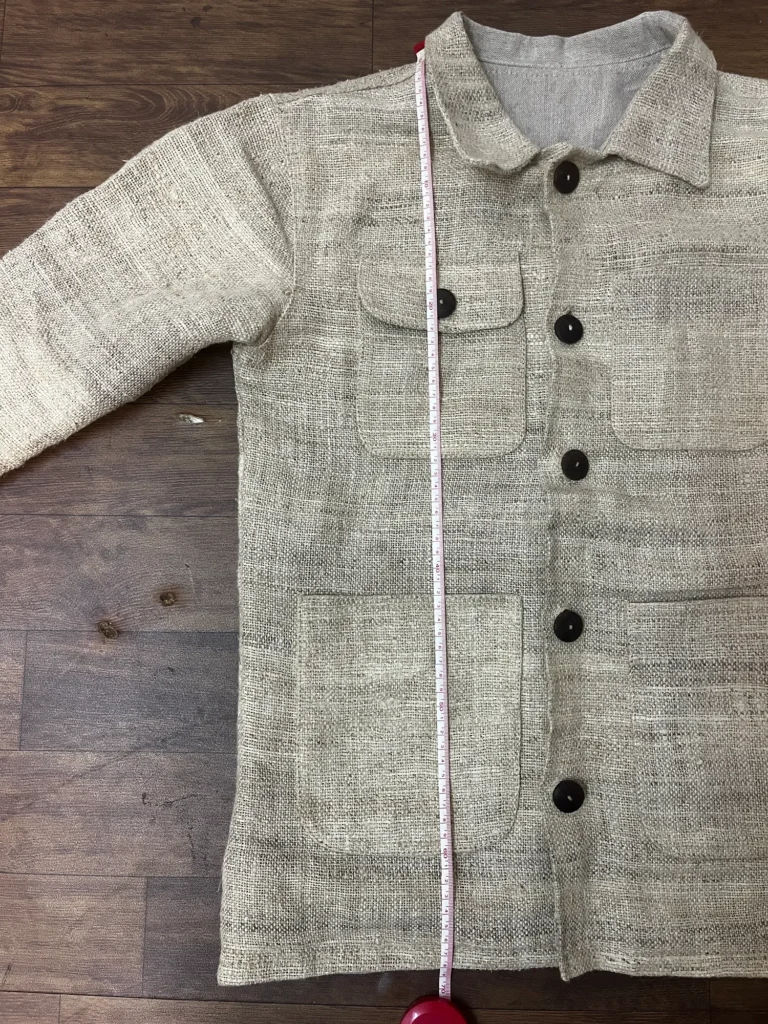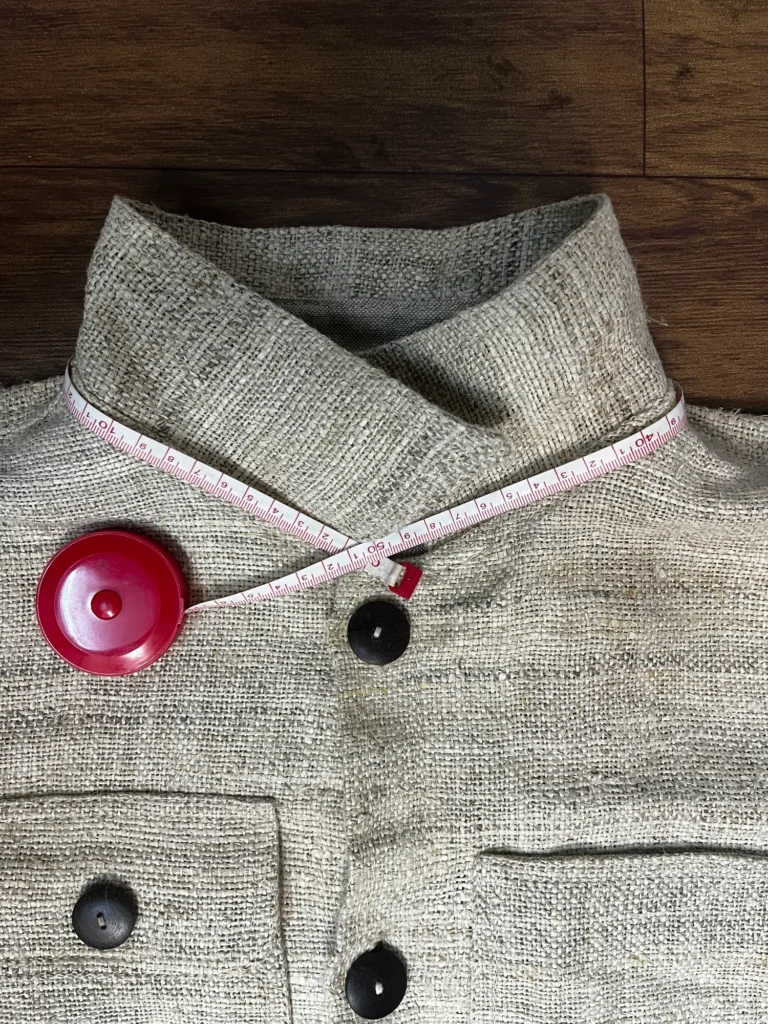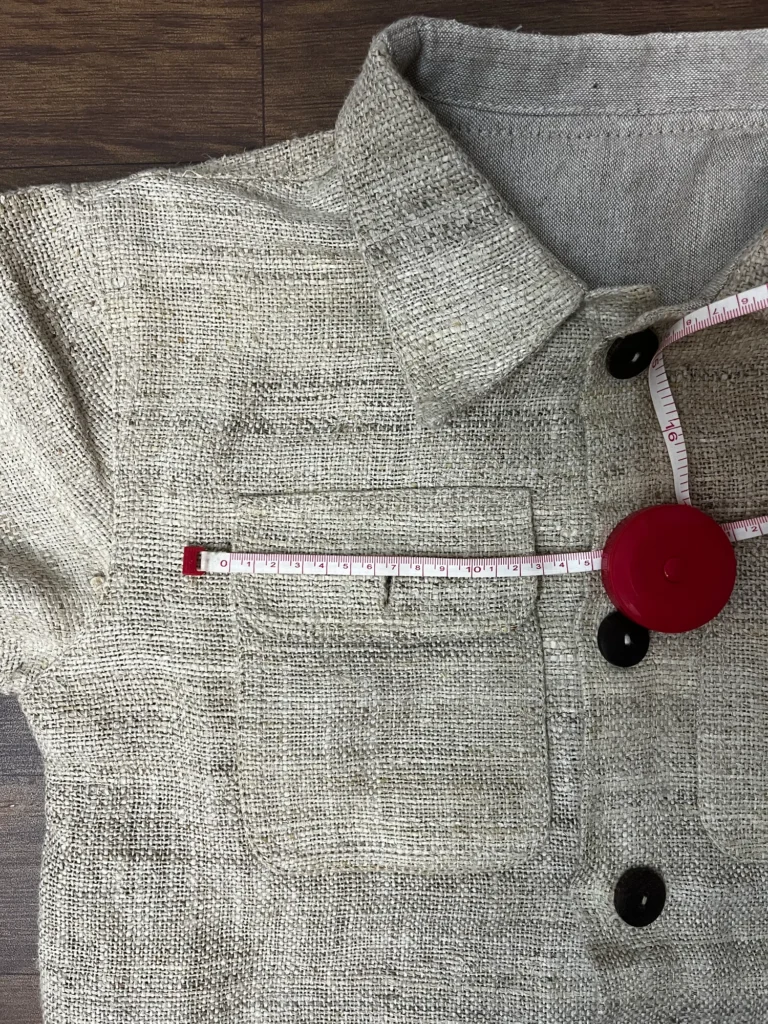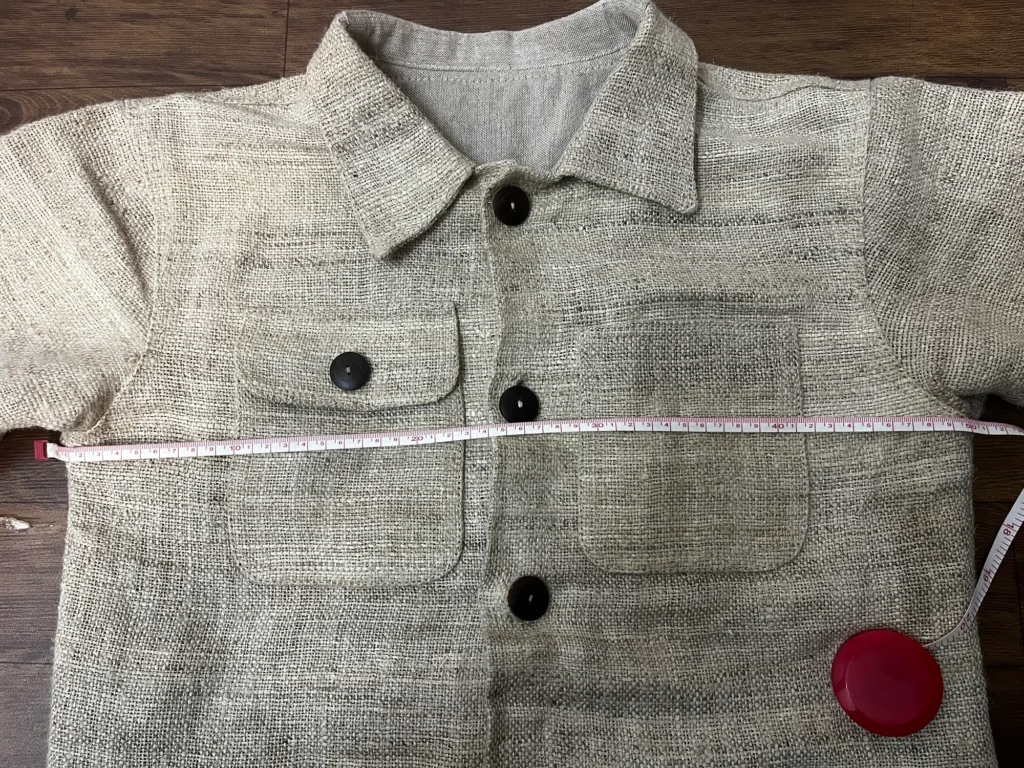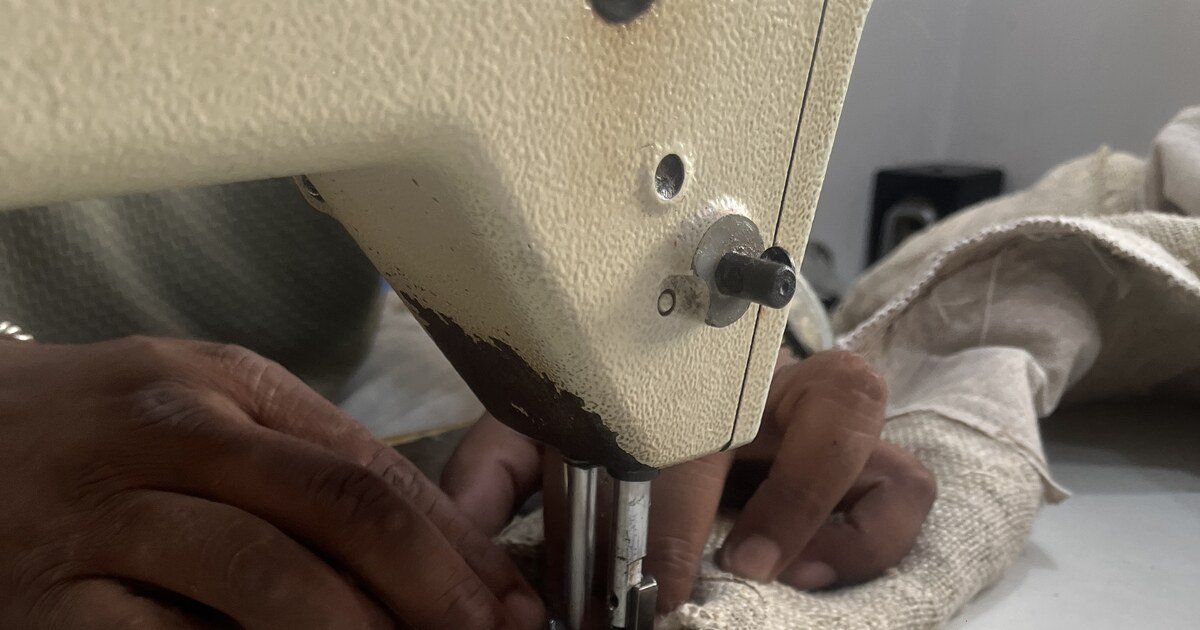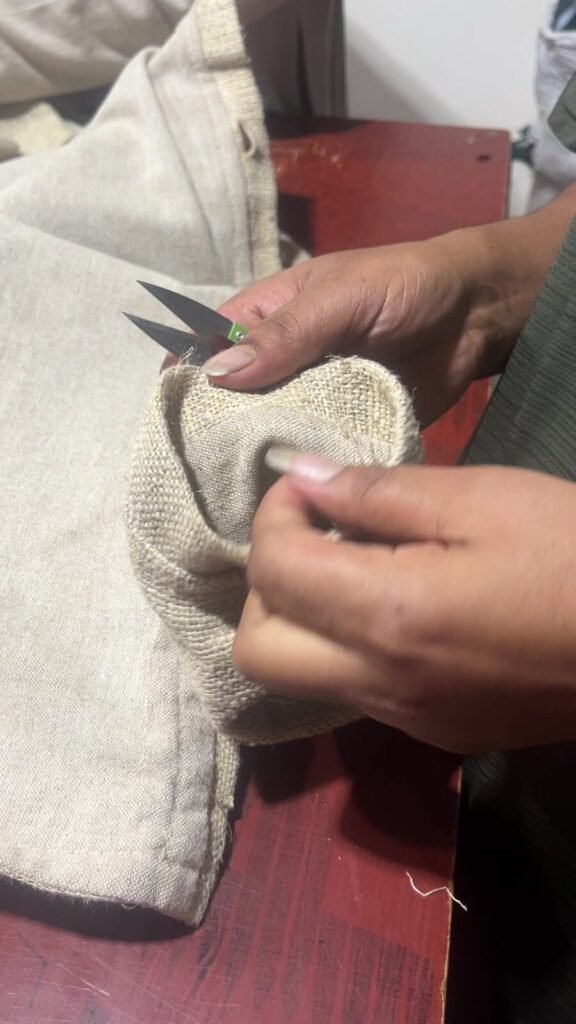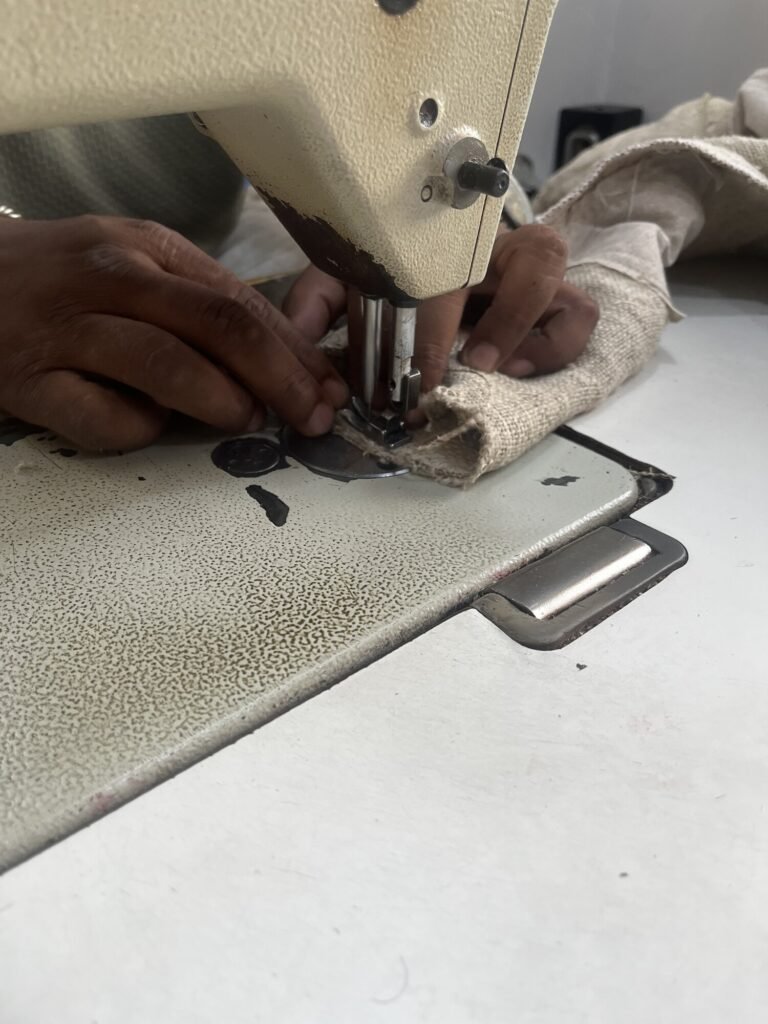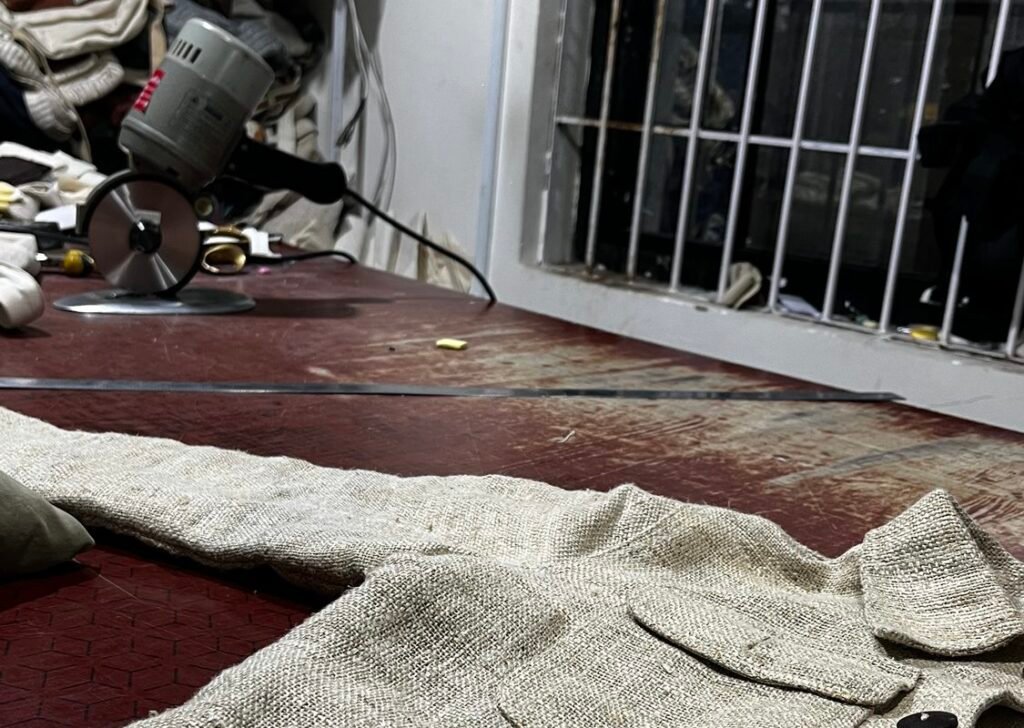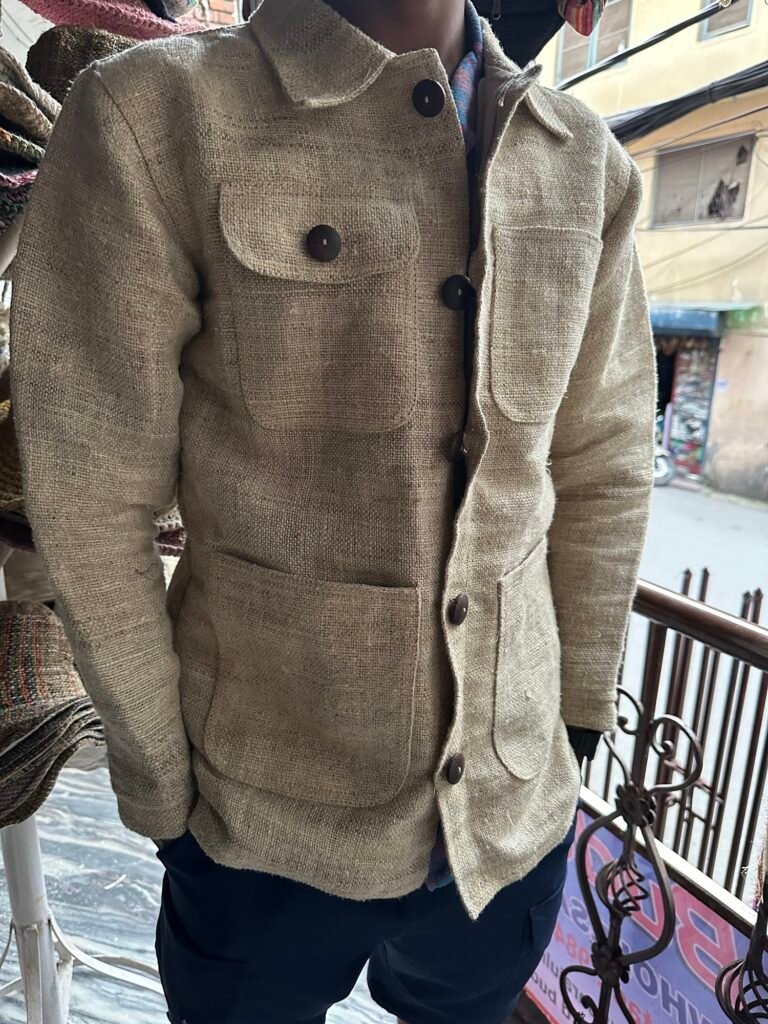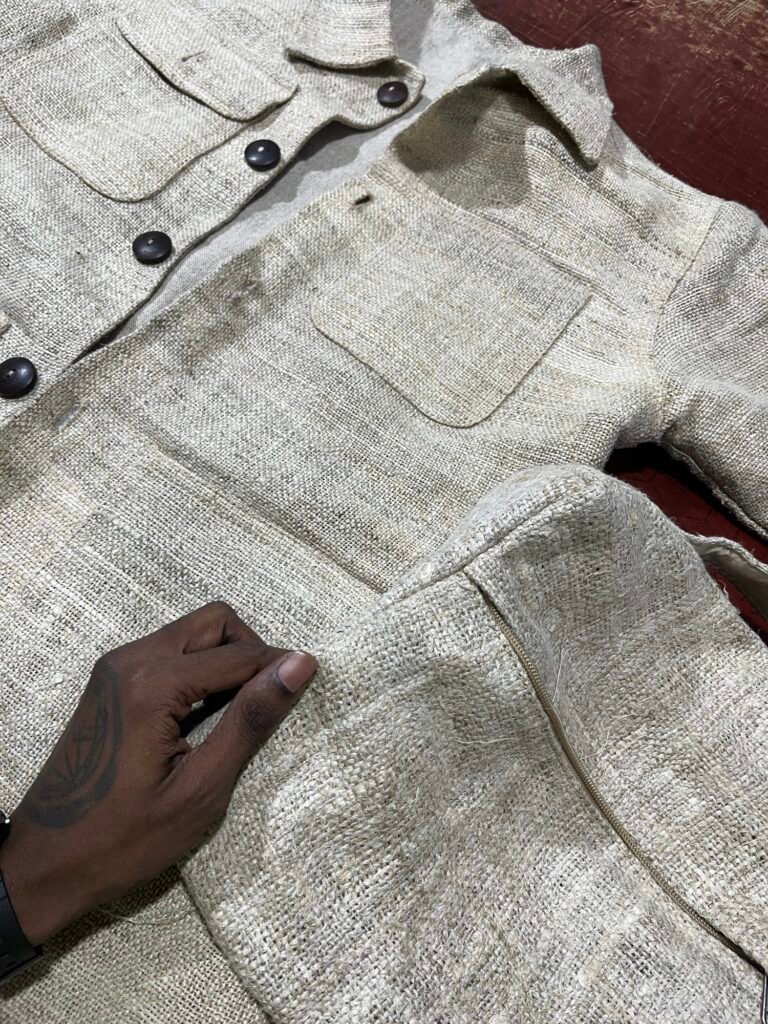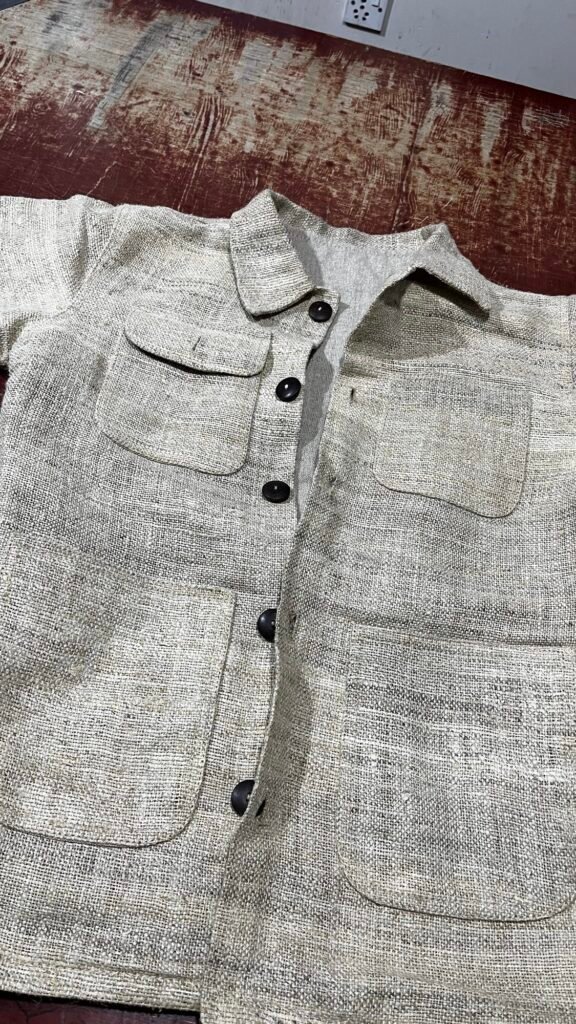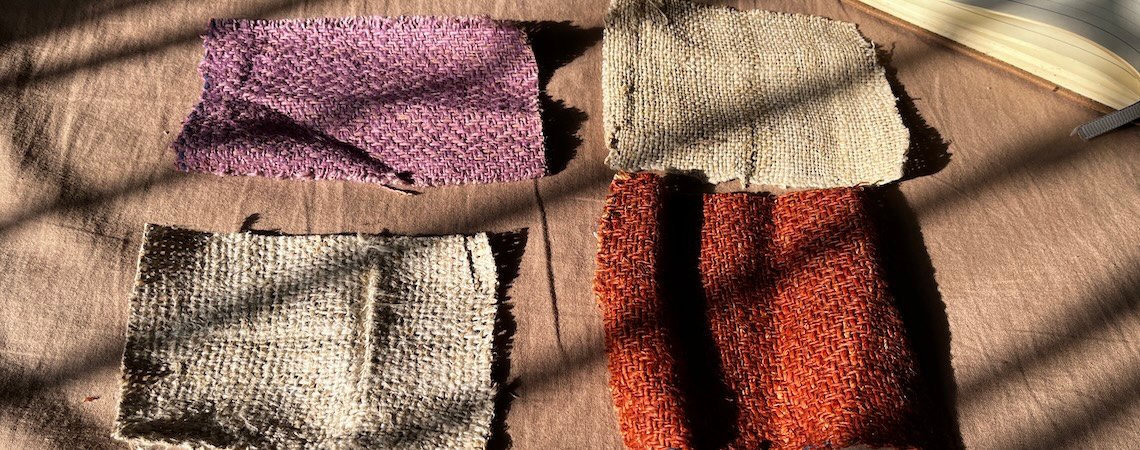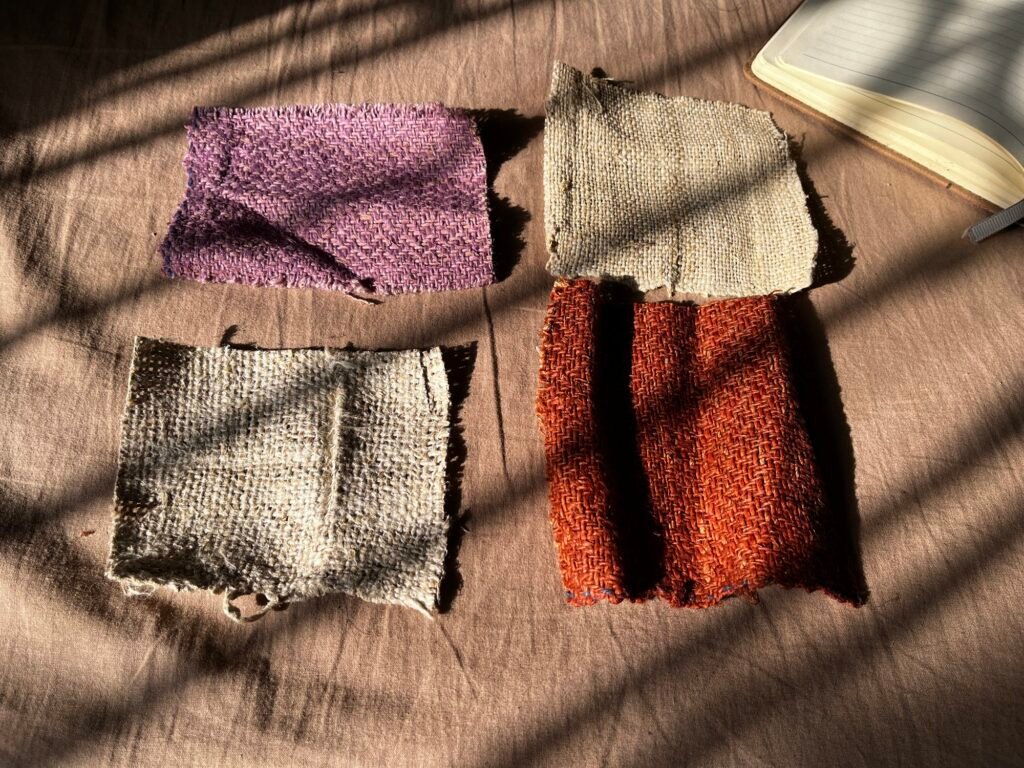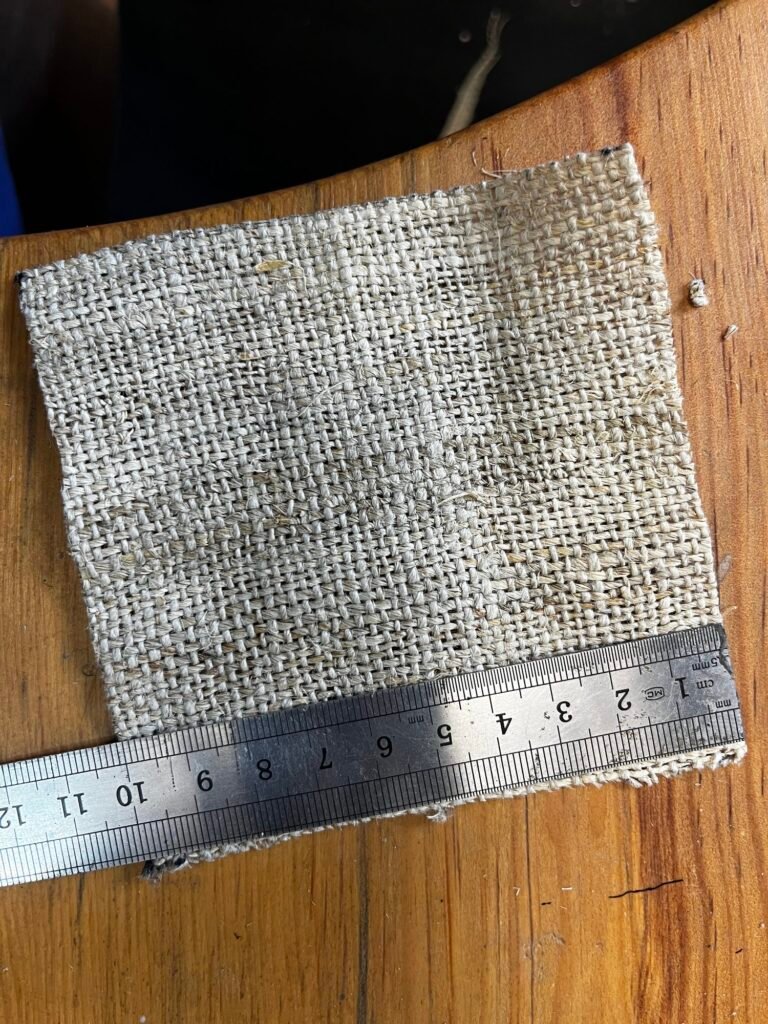
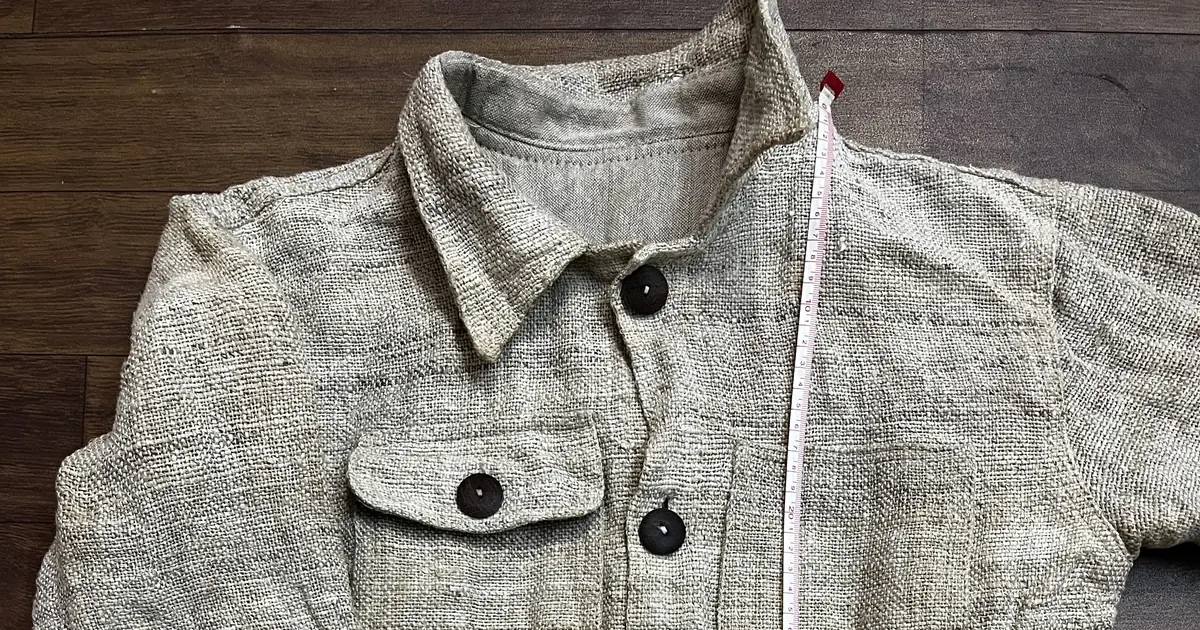
Washed around 13 October, measured 15 October 2026, Kathmandu.
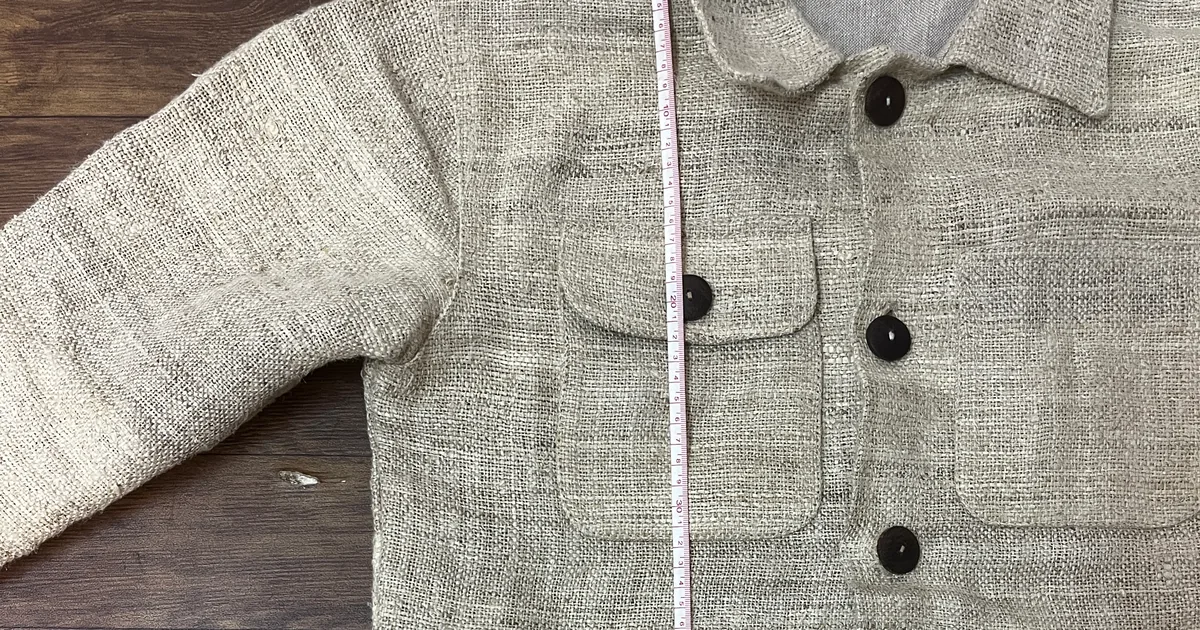
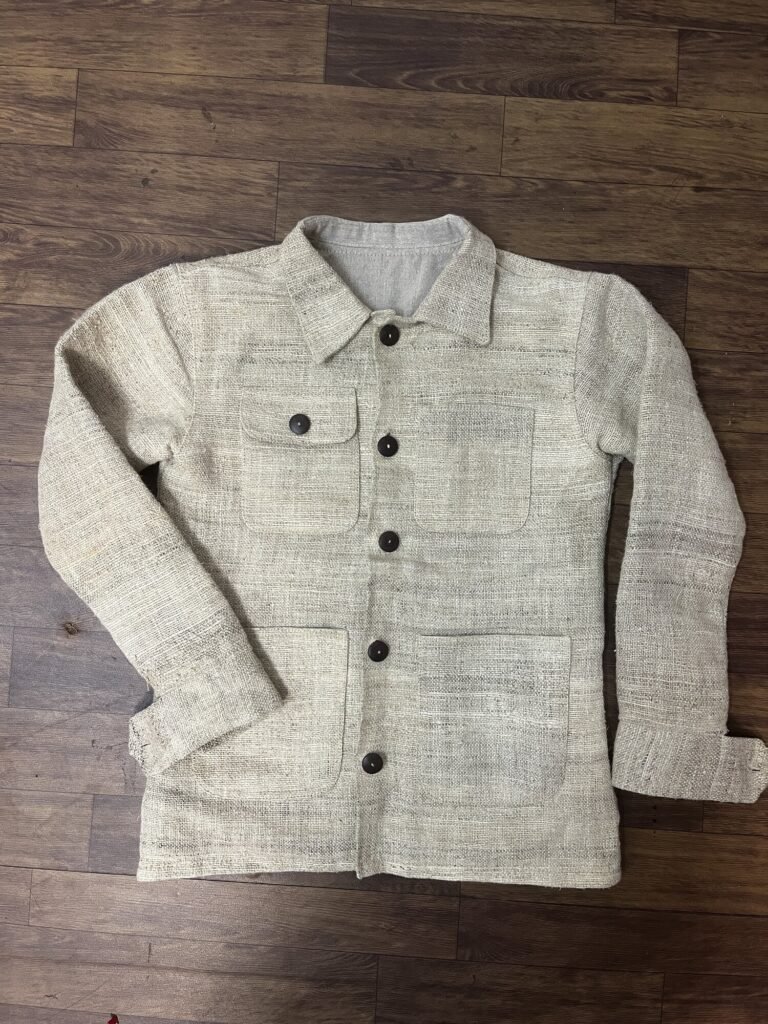
V2, the test jacket, has had its first wash: by hand, the way the workshop advises for handwoven hemp. Measured at the same 19 points as in Entry 04, every one came back smaller. Across the body it lost about 5%: roughly 4 to 5 cm around the chest, 3 cm across the shoulders and 3 cm in length.
The cotton liner didn’t shrink with it, and now hangs low inside the hem. And before anything was measured, the wash had already settled one thing: Run One’s care label won’t say hand wash only.
One wash, by hand
V2 was washed by hand, as the workshop advises for handwoven hemp for at least the first few washes. The water was at room temperature, with a mild detergent. It dried in the sun, laid flat on a drying stand with the sleeves hanging free over the edge.
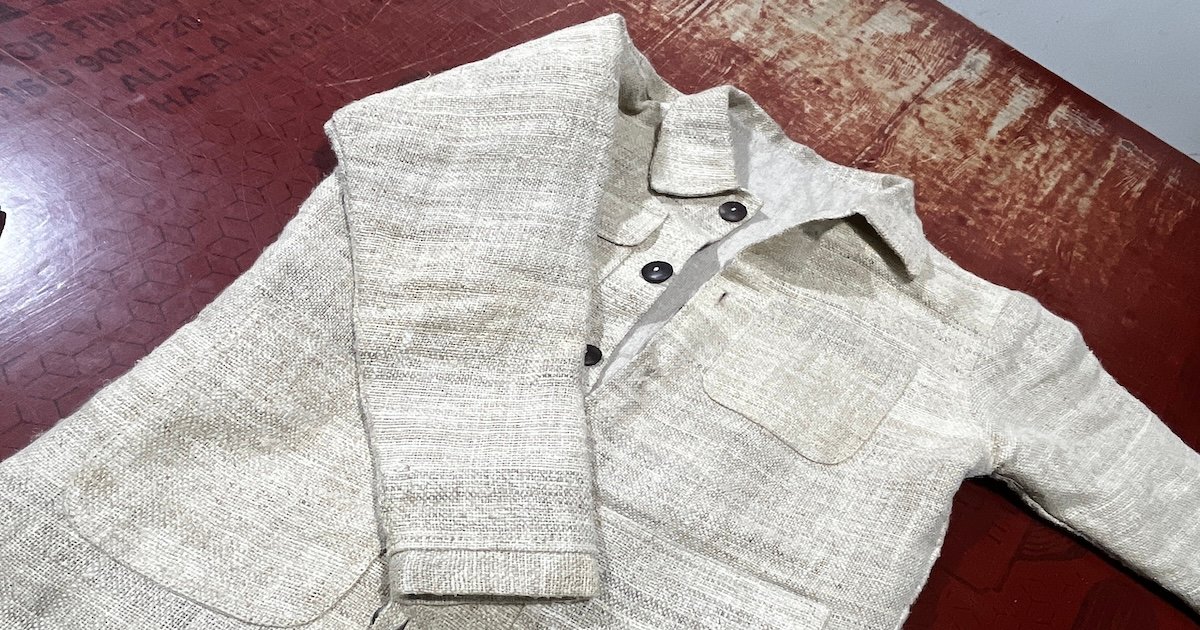
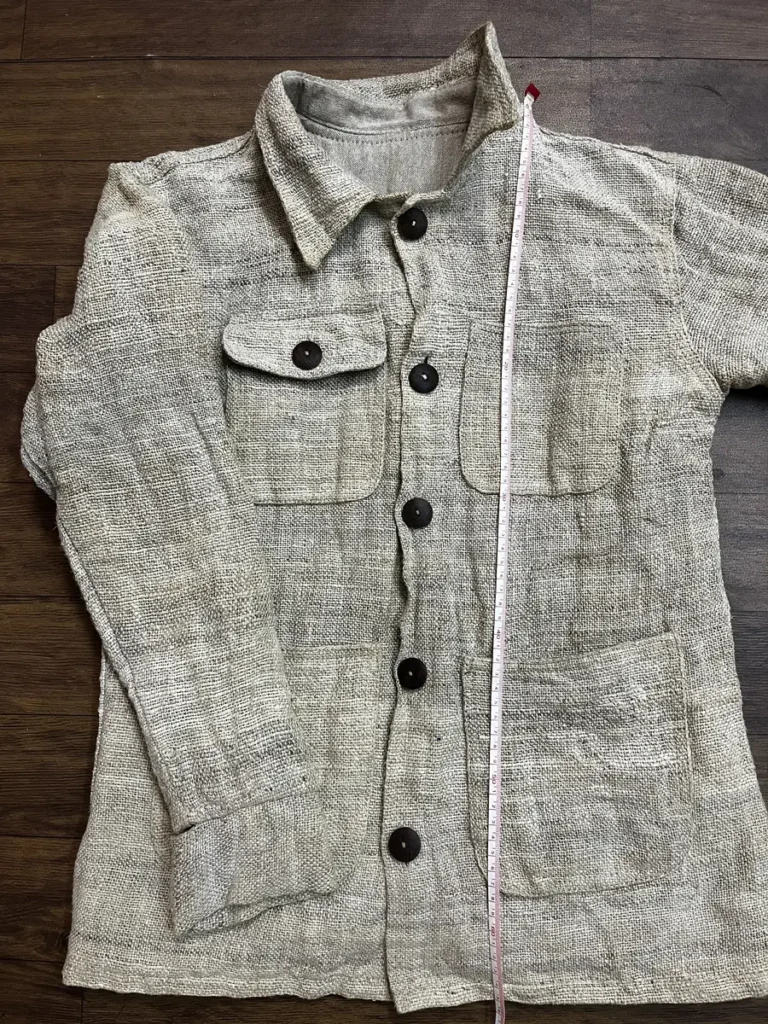
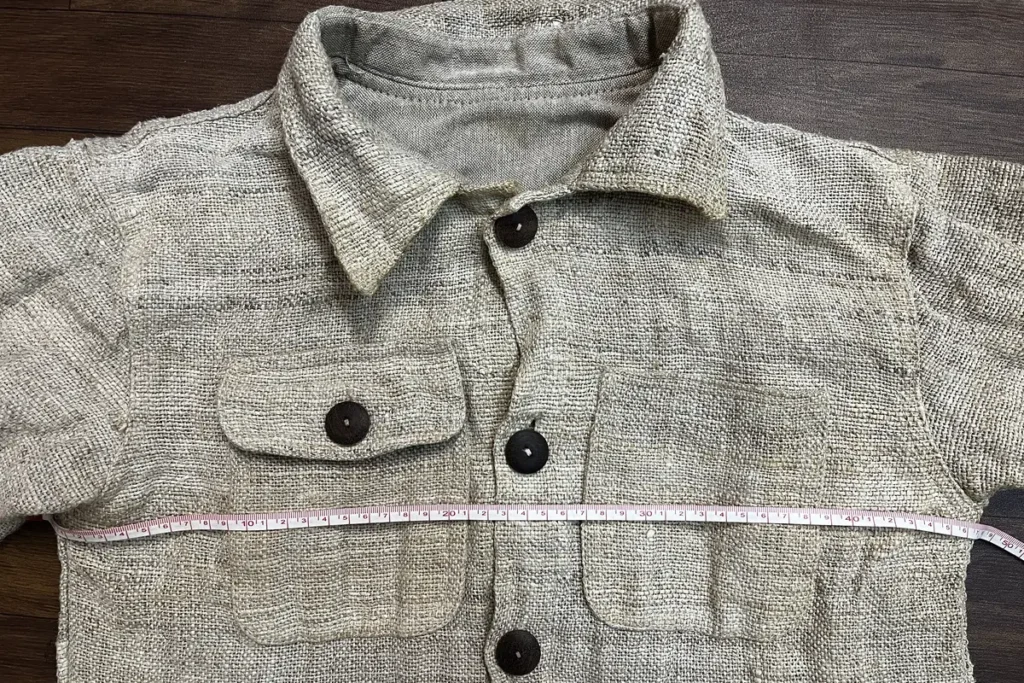
Drying took two days, because the first was cloudy, with rain. Once dry, it was measured flat and buttoned at the same points as in Entry 04. The wash itself isn’t photographed; the measuring is.
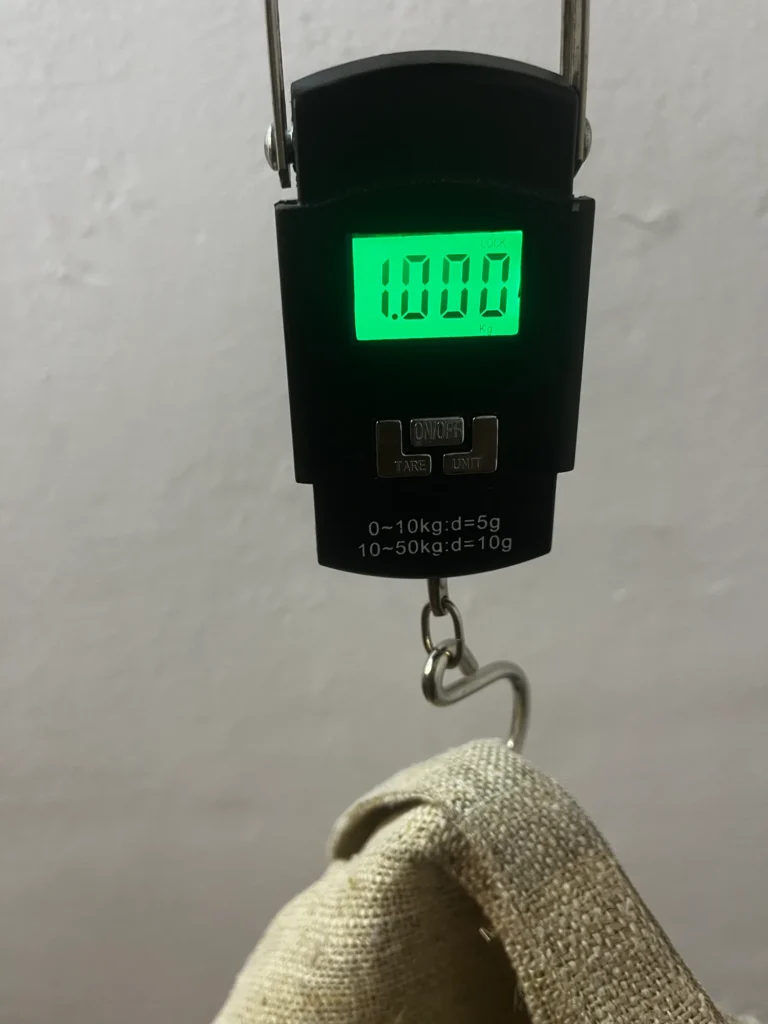
That settled the care label before anything was measured: hand wash only is out. V2 weighs 1 kg dry, far more soaked through, and washing it by hand took real effort. If the right way to wash a jacket is that much work, most people won’t do it, and the label stops describing how the jacket really gets washed. Run One has to survive a washing machine.
How much did it shrink?
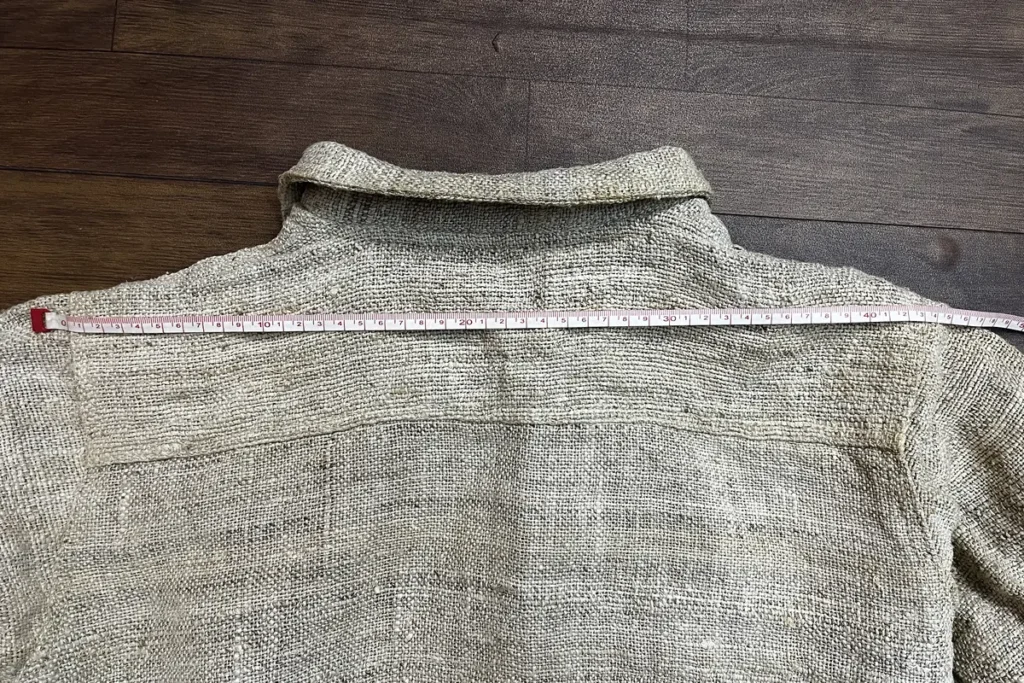
Every one of the 19 points came back smaller. On the body, the jacket lost about 5%: roughly 4 to 5 cm around the chest, 3 cm across the shoulders and 3 cm in length.
The figures here are rounded on purpose. A second measuring, after about an hour’s wear, put the chest at around 96 cm and the hem sweep at around 103: handwoven hemp relaxes with wear by about a centimetre. That movement is real, but the shrinkage is several times bigger.
Point | Before (cm) | After one wash (cm) | Change | Roughly |
|---|---|---|---|---|
Chest (pit to pit, doubled) | 100 | 95–96 | 4–5 cm smaller | 4–5% |
Shoulder (seam to seam, across the back) | 46.5 | 43.5 | 3 cm narrower | 6% |
Body length (high point of shoulder to hem) | 68 | 65 | 3 cm shorter | 5% |
Sleeve (shoulder seam to cuff edge) | 58 | 57 | under 1 cm shorter | 1% |
Hem sweep (edge to edge, doubled) | 104 | 102–103 | 1–2 cm smaller | 1–2% |
Armhole (straight, seam to seam) | 21.5 | 21 | under 1 cm smaller | 3% |
Collar length (point to point) | 55 | 53 | 2 cm shorter | 4% |
Collar height (centre back) | 6.5 | 5.5 | about 1 cm lower | 18% |
Cuff opening (straight across the open end) | 13 | 11 | about 2 cm narrower | 14% |
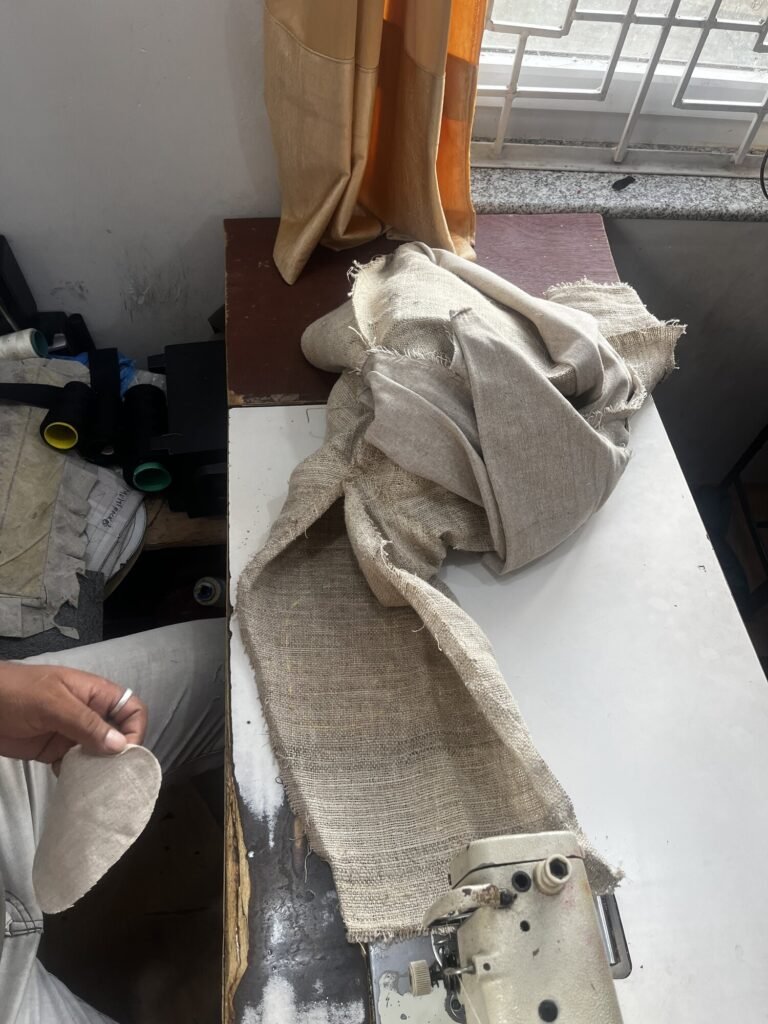
The rework happened in front of me, and it’s photographed as it happened. One tailor did the work, over an hour or two.
The pockets and flap each lost between a few millimetres and 1.5 cm, roughly 3–8%. Exact readings for every point stay in our test sheet.
Two points stand apart. The collar lost nearly a fifth of its height and the cuff opening about a seventh of its width, roughly three times the body’s rate, so both get measured again after the next wash before anything is read into them. The hem lost less than the chest, so V2 now sits a little fuller towards the hem than it did.
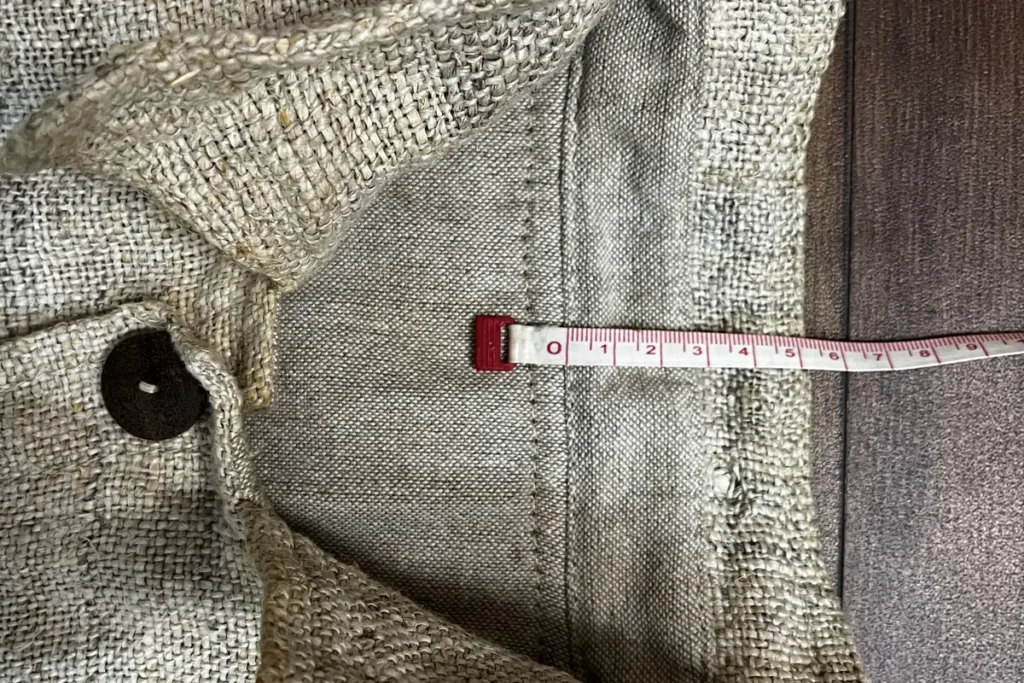
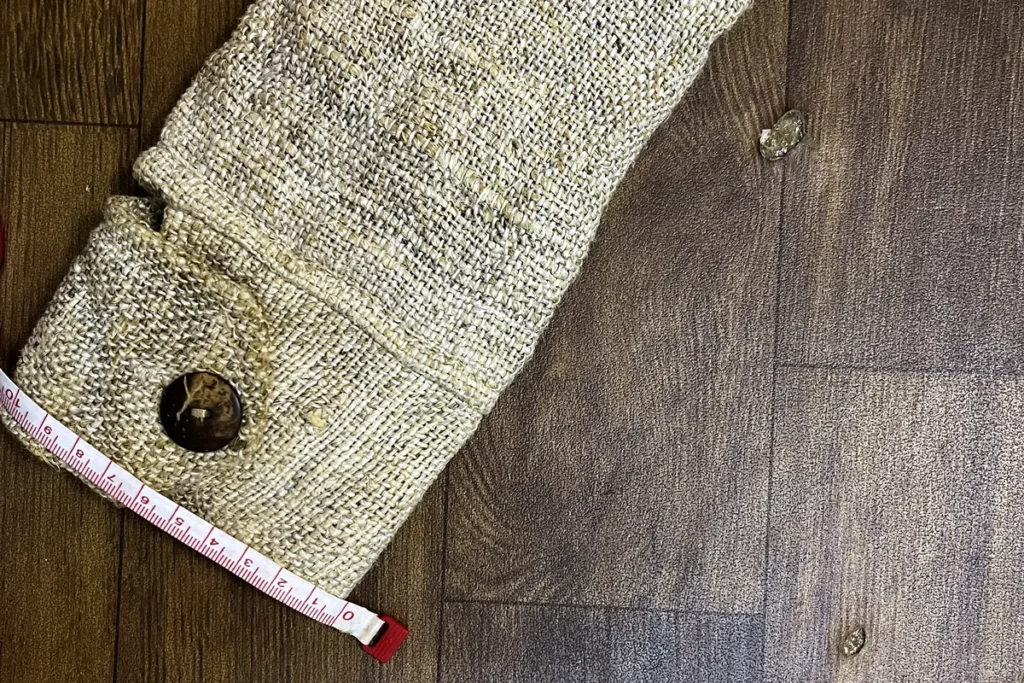
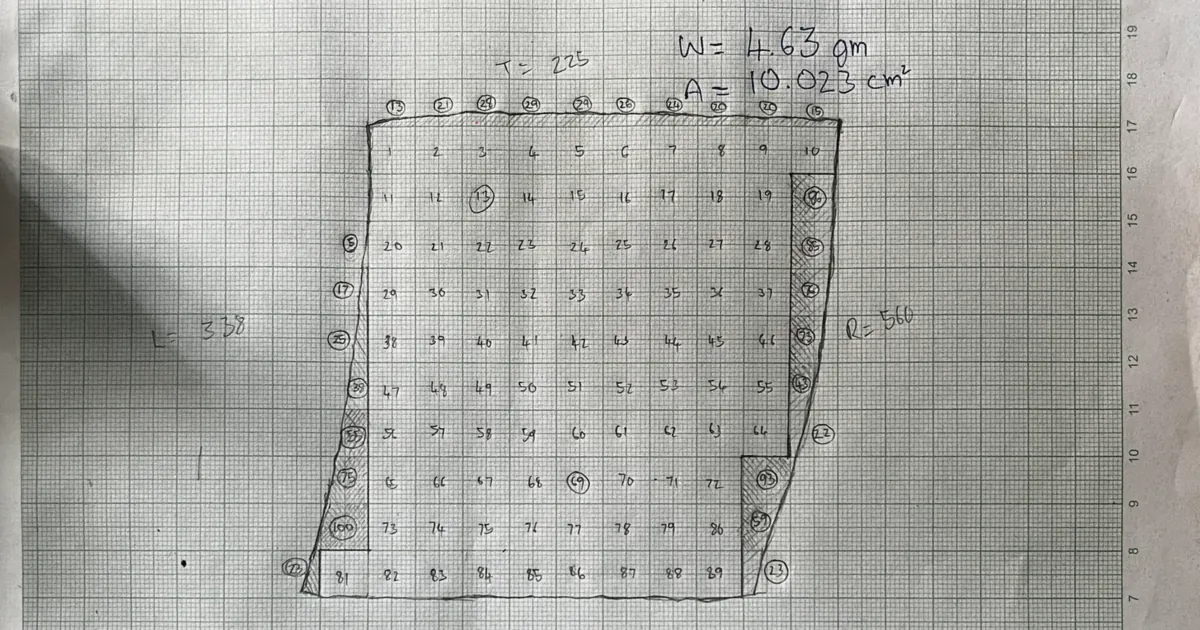
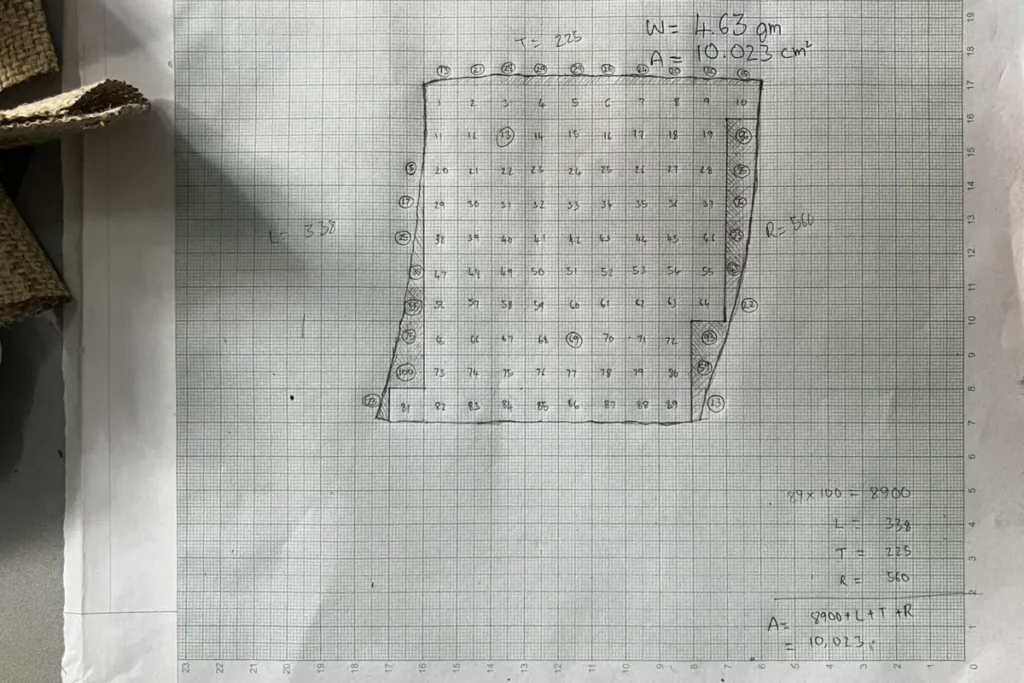
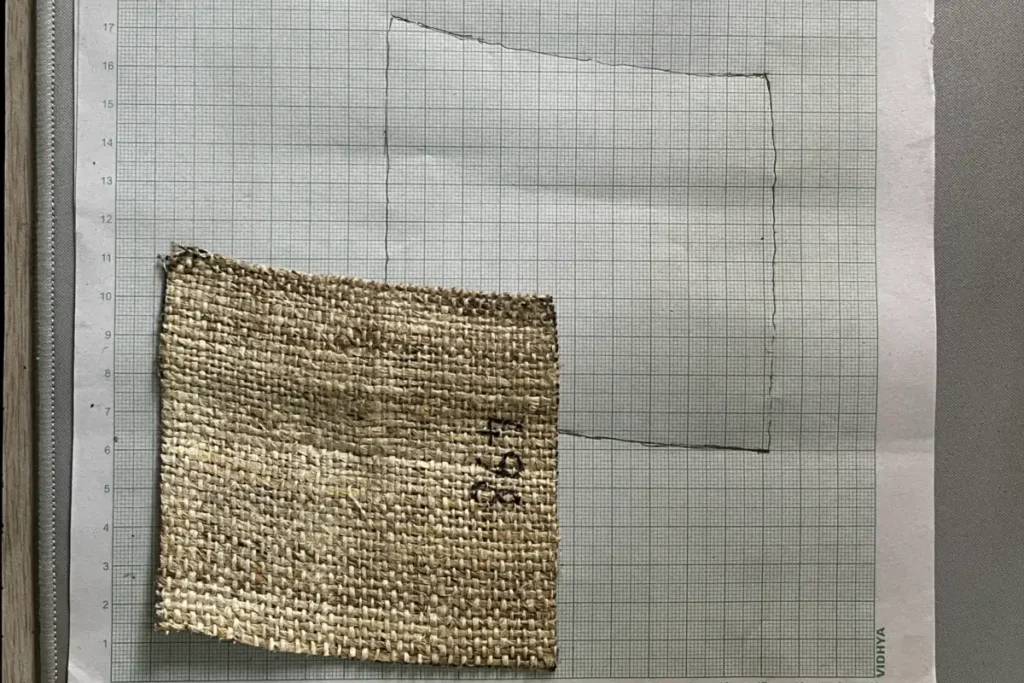
Garment points mix the cloth’s own shrinkage with how the jacket is sewn and how it dried, and V2 carries no thread markers that would separate the two. Clean figures for the cloth itself will come from the squares set aside in Entry 05.
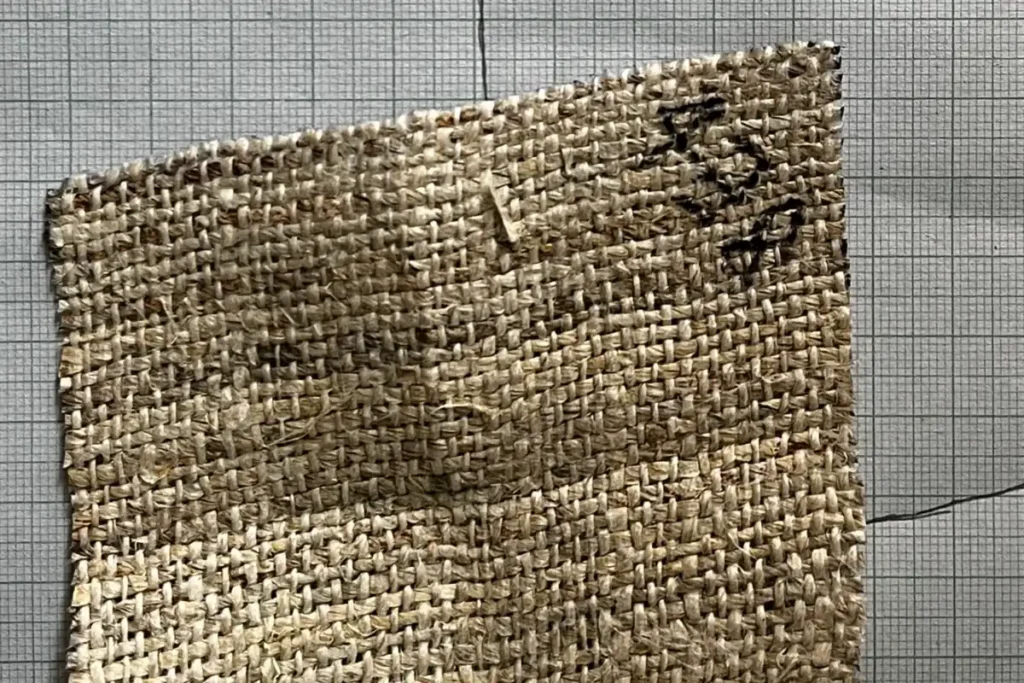
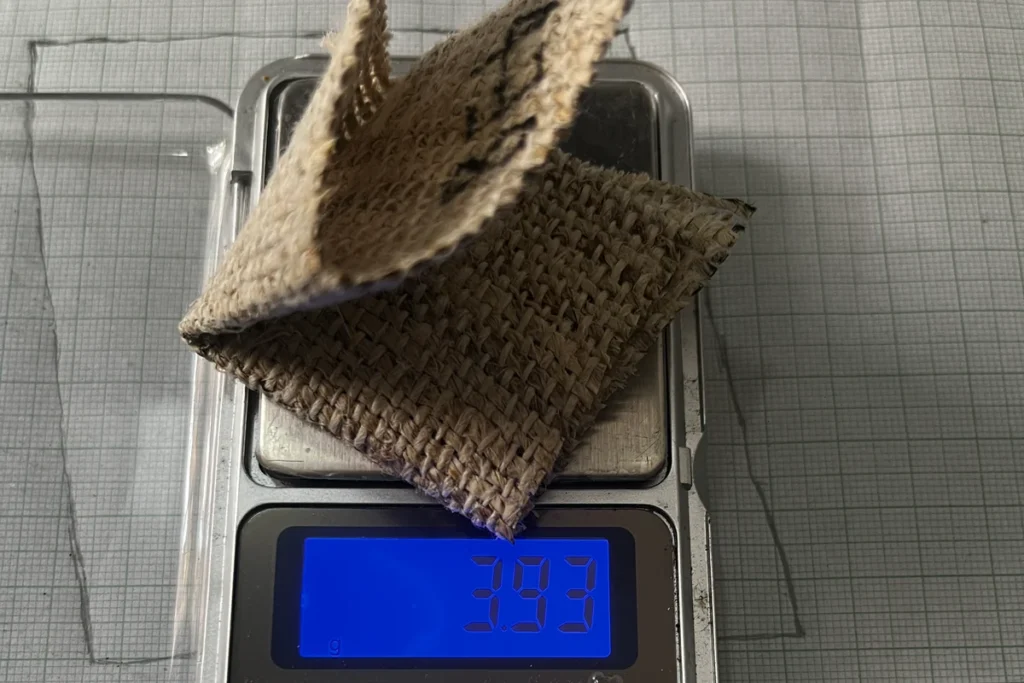
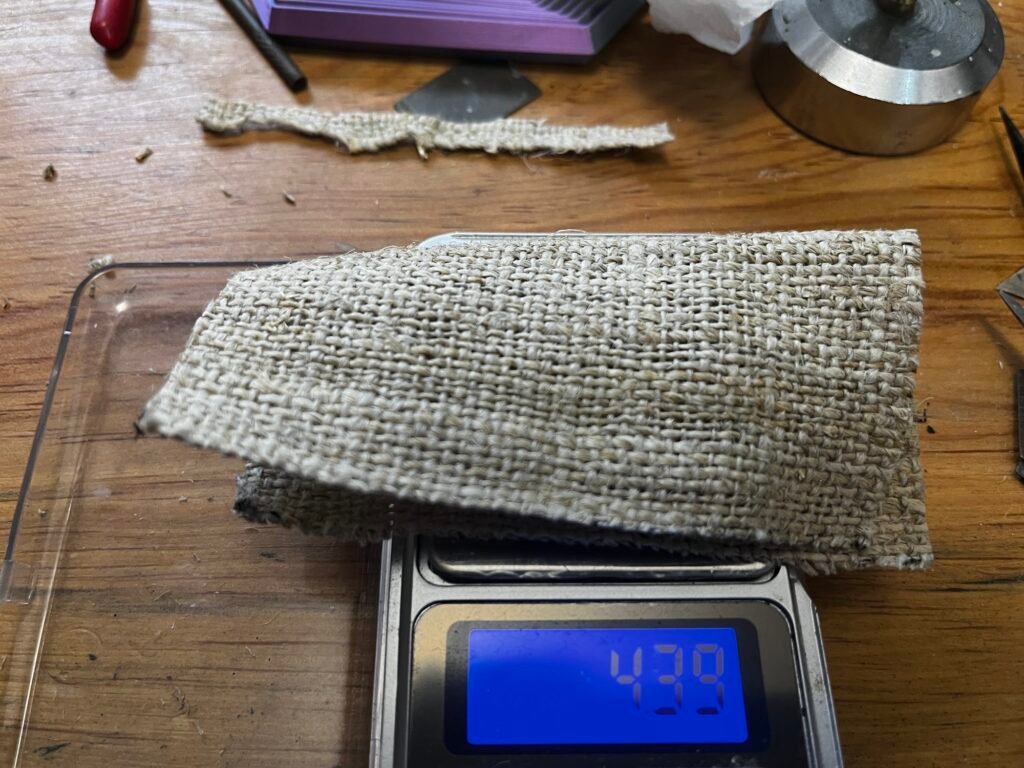
V2 also came out 65 g lighter: 935 g, from 1,000 g. Something washed out, and one wash can’t say what. Candidates include size (the starch weavers sometimes put on yarn), loose fibre, and the weather: hemp holds more moisture on a damp day, as Entry 05 noted.
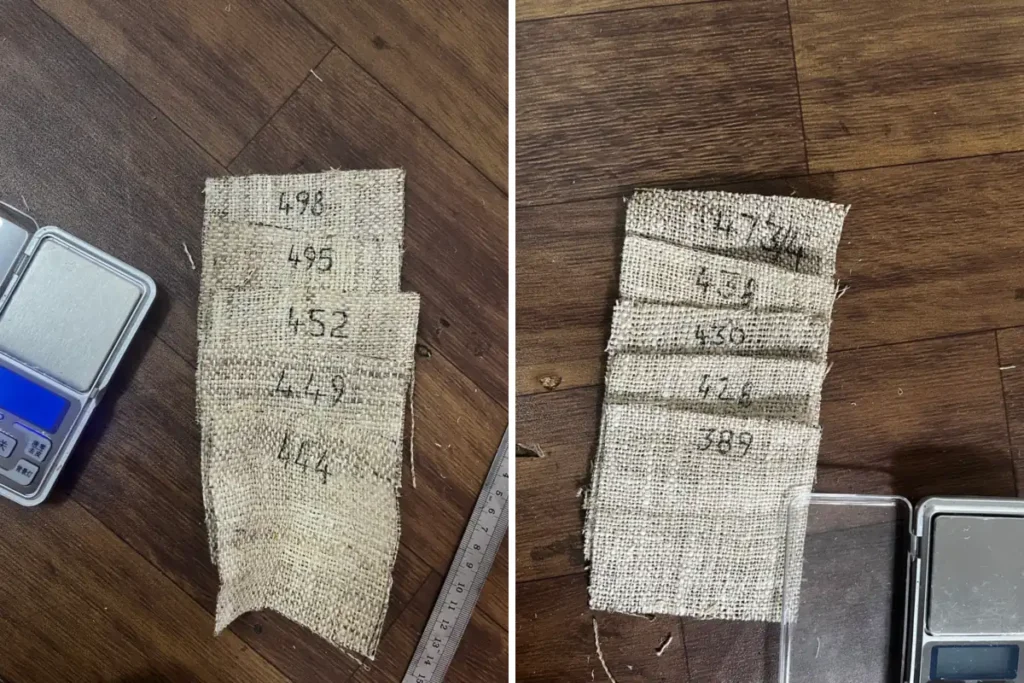
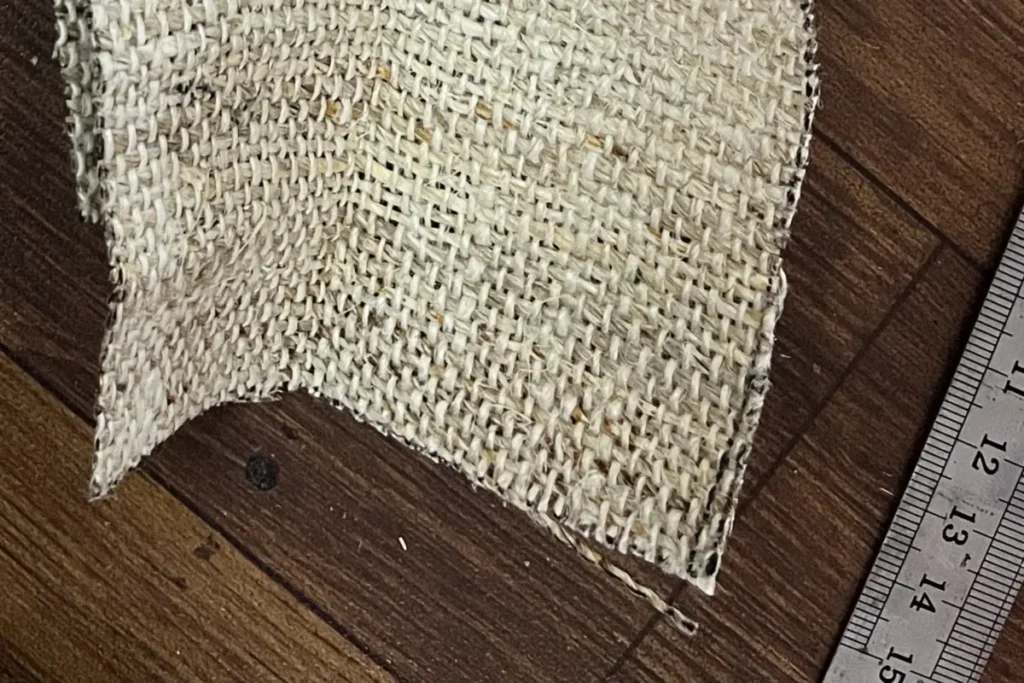
That makes Entry 05’s 420–462gsm a figure for the cloth before washing. Washed, the cloth is lighter and smaller at once. Which effect wins is for the three squares set aside in Entry 05 to show, not a sum done on a jacket.
Why don't the cuffs reach the wrist any more?
Trying V2 on after the wash, two things were obvious before the tape came out. The cuffs stop short of the wrist, and the arms are tight enough to limit how freely they move.
The sleeve itself barely changed: less than 1 cm shorter. The missing length is at the shoulders, which lost about 3 cm across the back and pulled each sleeve seam about 1.5 cm towards the centre. Counted from the centre of the back to each cuff (half the shoulder plus the sleeve), the jacket went from about 81 cm to about 79 cm: roughly 2 cm less on each arm.
The sleeves also dried differently from the body: they hung over the edge of the stand while the body lay flat. Wet cloth that hangs tends to stretch, which may be part of why the sleeve held its length. One wash can’t separate the two.
The tightness is harder to pin on the wash alone. V2’s sleeves came out of a one-sitting rework of V1, not a new pattern, and were narrow at the wrist before any washing (Entry 03). The protocol doesn’t measure sleeve width at the bicep or forearm, so the numbers can’t show how much tighter the sleeve itself got.
What they do show is 4 to 5 cm off the chest and 3 cm off the shoulders, and both affect how far an arm can reach forward.
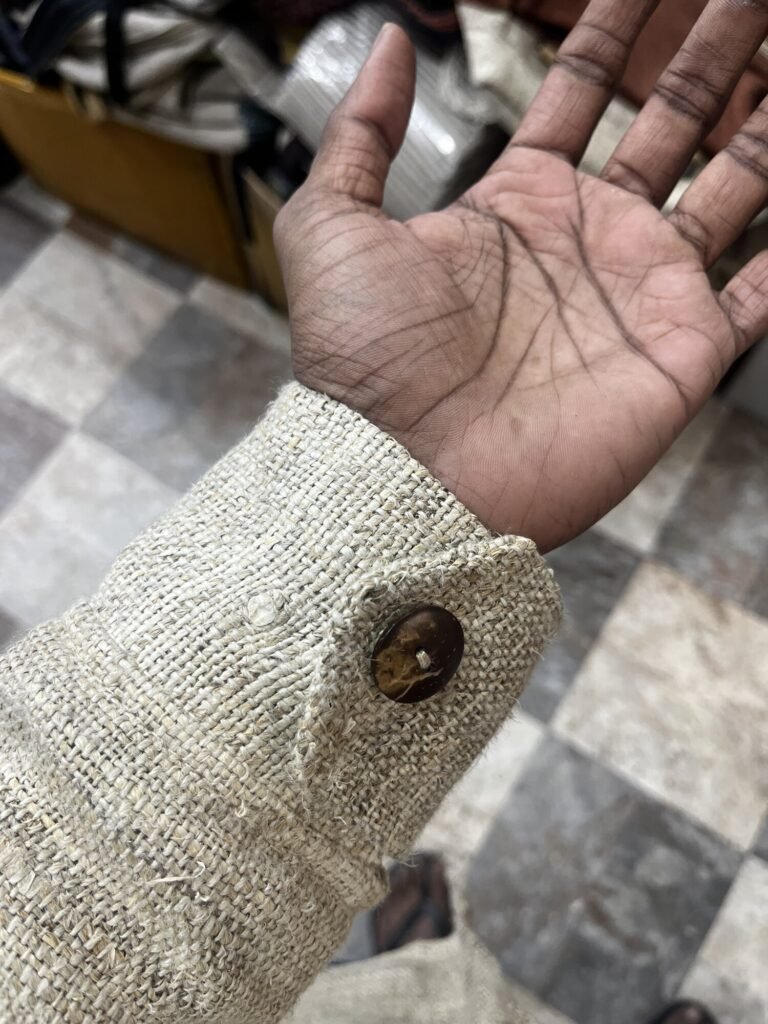
The cuffs that rubbed on first wear (Entry 03) feel slightly softer after one wash. One wash is too early to say how far that goes.
Why is the liner hanging at the hem?
Because the hemp shrank and the cotton, by the look of it, didn’t. V2’s body is lined in cotton, in a colour close to the hemp’s (Entry 02). It hasn’t been measured on its own, but it looks much the size it was, and the shell around it is now about 3 cm shorter.
The spare cotton has nowhere to go but down. It folds over inside the jacket, and at the hem it sits close to showing below the hemp.
This was one of the things the test was set up to catch: cotton and hemp can shrink by different amounts, so the lining is checked after every wash. It showed up on the first. The collar has a cotton lining too, added in the rework (Entry 03), which may be behind some of its lost height.
What the first wash changes
The wash settled the care label and opened two questions: how the cloth gets stable before it’s cut, and what the lining should be.
The cloth. Master Dai has told us the hemp is prewashed before it’s cut, and one more wash at home still took about 5% out of the body. That isn’t a contradiction: how cloth is washed and dried affects how much shrinkage comes out, and hemp can go on shrinking over several washes.
The test drew its line before the first wash: past 4% shrinkage, cloth is pre-shrunk before anything is cut for sale. At about 5%, the body is past it.
So the first question for the workshop is what their prewash involves: water temperature, time, how the cloth dries. And the requirement for Run One is that shell and lining both lose their shrinkage before cutting, not after someone has bought the jacket.
The lining. A hemp-cotton blend has come up twice before, for the collar and cuffs (Entries 02 and 03). This time it’s a 50:50 blend for the lining, which may wear better than plain cotton. A blend doesn’t fix the sag on its own, though: a different fibre doesn’t promise the shell’s shrinkage, so any candidate goes through the same wash test first.
What's still owed
- The next washes, with V2 measured again after the third, fifth and tenth, as Entry 04 set out. By machine from here, since that’s how the jacket will really be washed. Next time the whole jacket dries the same way, sleeves included, so sleeve and body can be compared.
- Sleeve width at the bicep and forearm, added to the measuring from the next wash. V2 has no before for these, so they track change from here.
- What the workshop’s prewash involves.
- Shrinkage figures for the cloth itself. The three squares set aside in Entry 05 go through a wash of their own, measured before and after, with any lining candidate alongside.