Entry 03: Reworking the First Hemp Chore Jacket Sample

Logged–23 September 2026, Kathmandu.

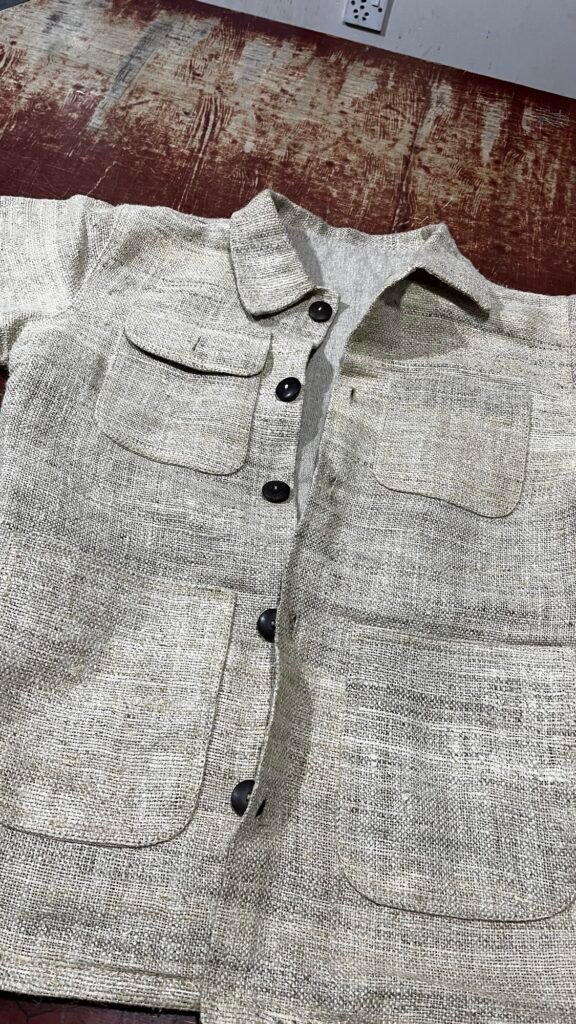
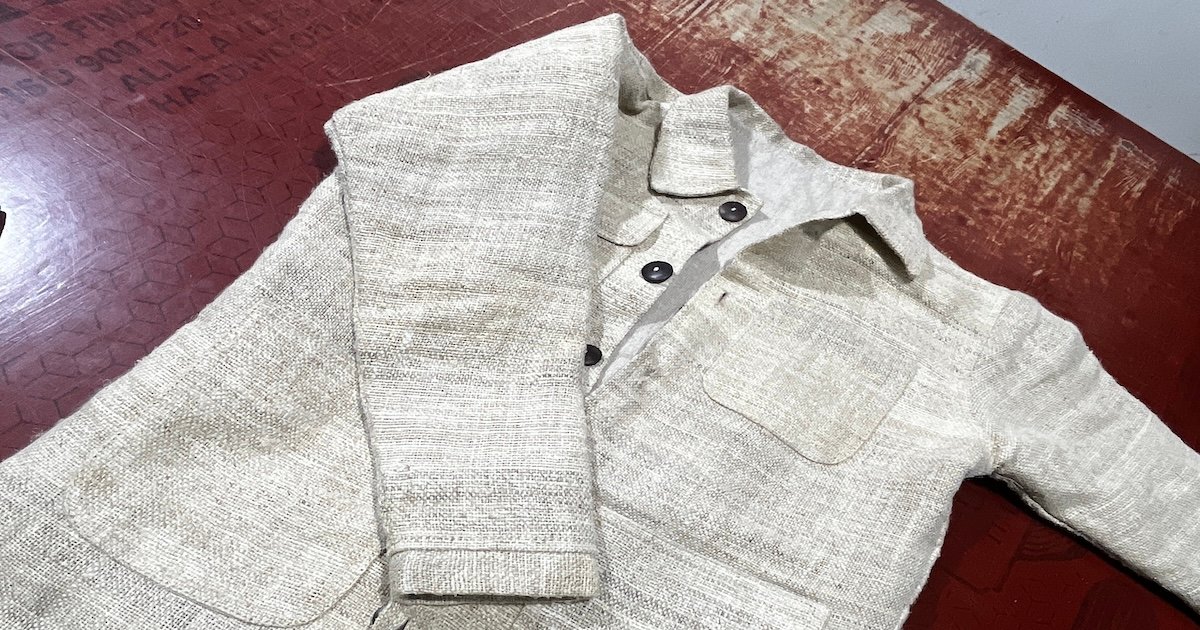
V2 isn’t a new sample. It’s the first sample of our handwoven hemp chore jacket, the one that came back wrong, reworked at the workshop in a single sitting. It now has longer cuffs, reshaped sleeves, cotton lining at the neck and a cotton patch inside the elbow.

It fits better than V1, and it still doesn’t fit right: the sleeve is narrow at the wrist, so the cuff folds back only once. On its first wear, the unlined hemp cuffs rubbed the wrists.

What Needed Fixing

The first sample’s sleeves were short at the cuff, wide through the bicep and over-tapered toward the wrist. It had no foldable cuffs, and none of the cotton liner patches we’d specified at the neck and elbow. The measurements it was meant to be cut from had been lost in a handoff months earlier.

One Sitting at the Workshop

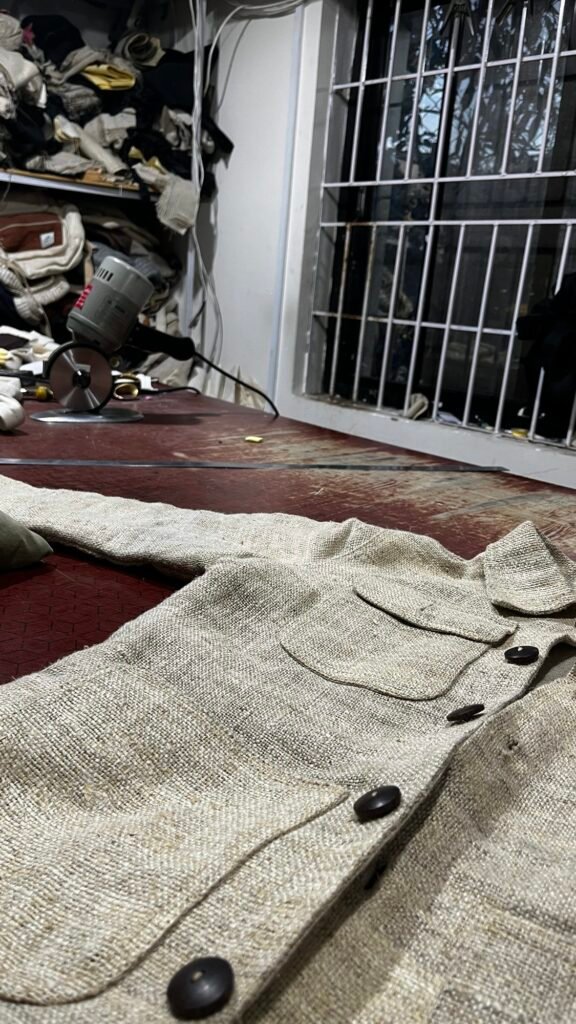
The rework happened in front of me, and it’s photographed as it happened. One tailor did the work, over an hour or two.

Master Dai was there. (Master is the title for the lead tailor; Dai means elder brother, the word for someone whose read on the work outranks yours.)

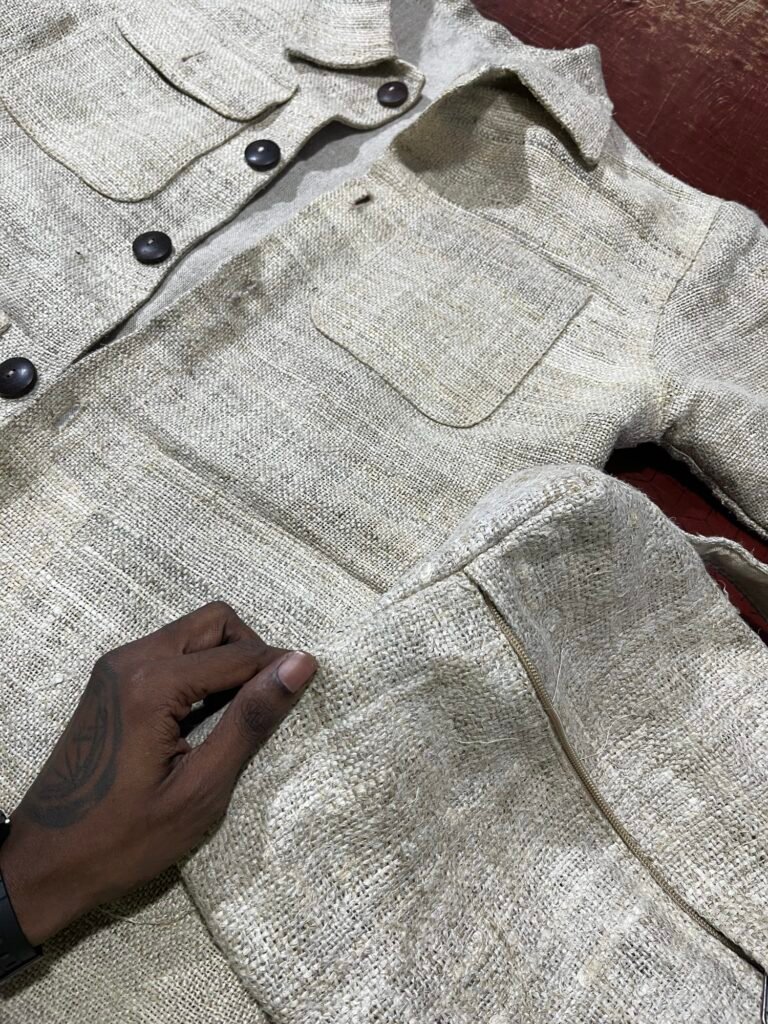
To change the sleeves, the tailor first unpicked the seams of both layers: the hemp shell and the cotton liner. Here’s what changed.

Area

V1

V2

Where it stands

Sleeve length

Short at the cuff

New, longer cuff

Fixed: the sleeve now covers the full arm

Lower sleeve

Too narrow toward the wrist

Seam allowance let out toward the wrist

Better, still narrow at the wrist

Bicep

Too wide

Taken in

Looks okay, not ideal yet

Cuffs

Not foldable

Foldable, per spec

Fold back only once: too narrow at the wrist to roll up to the elbow

Neck

No liner patch

Cotton lining added

Done

Elbow patch

Missing

Cotton patch stitched to the inside of the hemp shell

In place, but on the shell, not the liner

Cuff lining

—

None

Open: see below

The spec put the elbow patch on the liner, as an extra layer where a lining is likely to wear through first. On this sample it couldn’t be attached to the liner, so it’s stitched to the inside of the hemp shell instead.

Why Couldn't the Sleeve be Fully Fixed?

V1’s sleeve was cut the wrong shape: too wide at the bicep, too narrow toward the wrist. The tailor let out the seam allowance toward the wrist and took the sleeve in at the bicep.

Taking in is always possible; letting out isn’t. A seam can only give back the fabric already folded inside it. Past that, more width means new fabric, such as a new sleeve or an inserted panel, or a corrected pattern.

That’s why the wrist end is better and still narrow. For Run One, the correction belongs in the pattern, not in more alterations to one sample.Lorem ipsum dolor sit amet, consectetur adipiscing elit. Ut elit tellus, luctus nec ullamcorper mattis, pulvinar dapibus leo.

Buttonholes: One Last Stop

The new cuffs needed buttonholes, and the buttonhole machine isn’t at the workshop. It’s at the first supplier’s shop in Thamel, so the jacket went there the same day, with collection set for the next day.

When I went back, the buttonholes hadn’t been done yet; they were finished later that day. It’s worth knowing for Run One’s timeline: when one garment’s machines sit at two addresses, a finished jacket can take an extra trip and an extra day.

While I was collecting it, another customer at the shop asked about the jacket. The shop told them it was a one-off, which, being a sample, it is.

How Does Wearing a Hemp Jacket Feel Like?

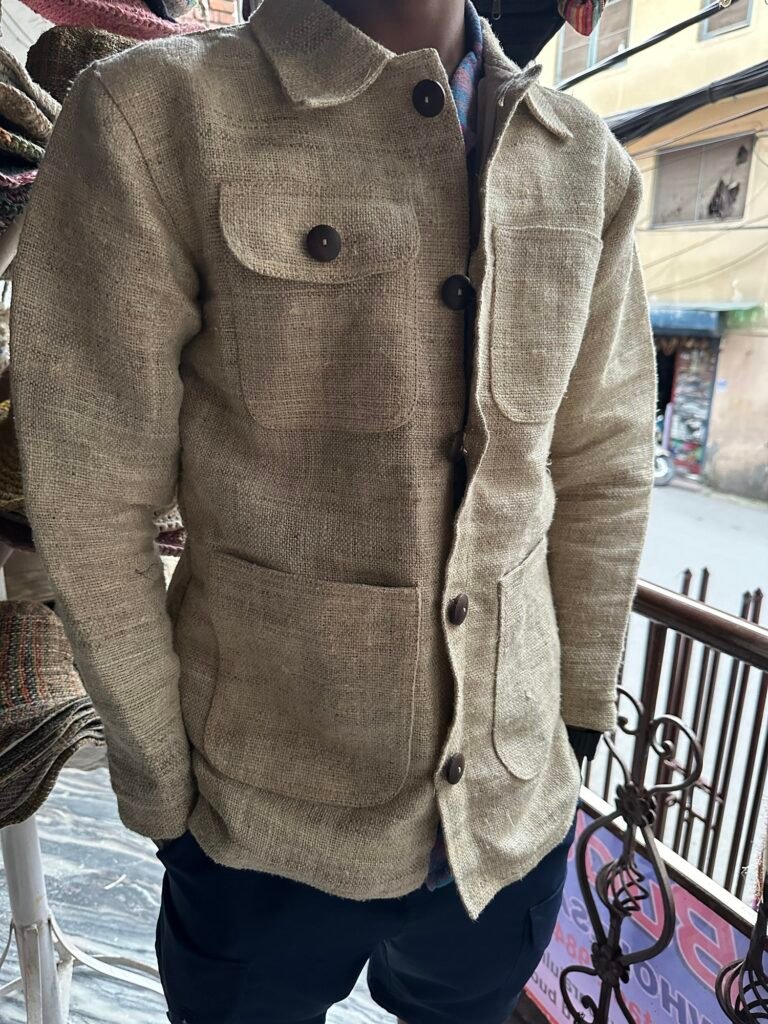
V2’s first time outside was the walk home on Wednesday 23 September: 15 to 20 minutes on a cool evening, worn over a shirt with a backpack on. It was a humid, overcast day in Kathmandu, between about 18°C and 26°C.

The jacket was comfortable the whole way, neither cold nor too warm, even with the backpack. One walk isn’t a warmth test, and it isn’t logged as one: it’s a first impression.

On the body, the sleeves now cover the full arm, and the bicep is no longer too wide; it looks okay, not ideal. The wrist end is still narrow, so the cuff folds back once and the sleeve won’t roll up to the elbow.

The cuffs rubbed against the wrists. They’re unlined hemp: the neck now has cotton against the skin, and the cuffs don’t.

The tailor’s view is that these cuffs can’t take a liner. Whether a cuff built with a lining from the start is possible is one of the first questions for the second supplier.

The rub also reopens a decision from the first sample. Master Dai suggested a hemp-cotton blend at the collar and cuffs, for softness, and we turned it down for durability. One walk is thin evidence, but it points his way.

Hemp is widely reported to soften with washing and wear, so some of this may ease on its own. V2 hasn’t been washed yet, and Master Dai says the hemp is prewashed before it’s cut. Whether a wash at home softens the cuffs is something we’d rather find out than assume.

Still Open After V2

  • Can the cuffs be lined, and can the elbow patch go on the liner as specified? Both questions go to the second supplier.
  • Does the hemp-cotton blend come back for the cuffs?
  • The sleeve correction has to reach the pattern, whoever cuts Run One.
Entry 02: The First Hemp Chore Jacket Sample Came Back Wrong

The first sample of the Funcle Yeti chore jacket was made in Kathmandu from handwoven hemp, and it did not pass.

Rotary fabric cutter and offcuts in the Kathmandu workshop where the hemp chore jacket is made

What Was Specified

The brief asked for foldable cuffs and cotton liner patches at the neck and elbows — the two places a jacket gives out first on anyone who actually wears one. Reinforce them at the start and you’re patching in year eight instead of replacing in year three.

First fitting of the handwoven hemp chore jacket showing a short cuff and tapered sleeve

What Came Back

No foldable cuffs. No liner patches at the neck or elbows.

The fit was closer than it had any right to be, and there’s a reason for that. My measurements had been taken months earlier and left with the workshop, and by the time the sample was cut they’d gone missing. The Master Dai worked from judgment instead. Master is the title for the lead tailor; Dai means elder brother — what you call a man whose read on the work outranks yours.

Close-up of the collar and cotton liner on a handwoven hemp chore jacket sample

He got the torso right by eye, which is a genuinely impressive thing to do. The sleeves he did not. Too short at the cuff, too wide through the bicep, and tapered hard enough that you notice it on the first wear rather than the tenth.

The One Thing That Was Right

He lined it in a cotton matched close to the hemp. I thought it looked dull. He was thinking about dye transfer onto undyed cloth over ten years of washing, which is the correct thing to be thinking about. The liner stays.

Handwoven hemp chore jacket first sample laid flat on a workbench in a Kathmandu workshop

What Happens Next

The sample went back for rework. V2 is in progress. If it holds, the same spec goes to a second workshop — with the measurements taken fresh, on the day, by someone who doesn’t have to guess.

Seeing the thing exist in cloth for the first time was a good day, for the record. It just wasn’t a finished jacket.

Entry 01: Looking for Hemp in Kathmandu

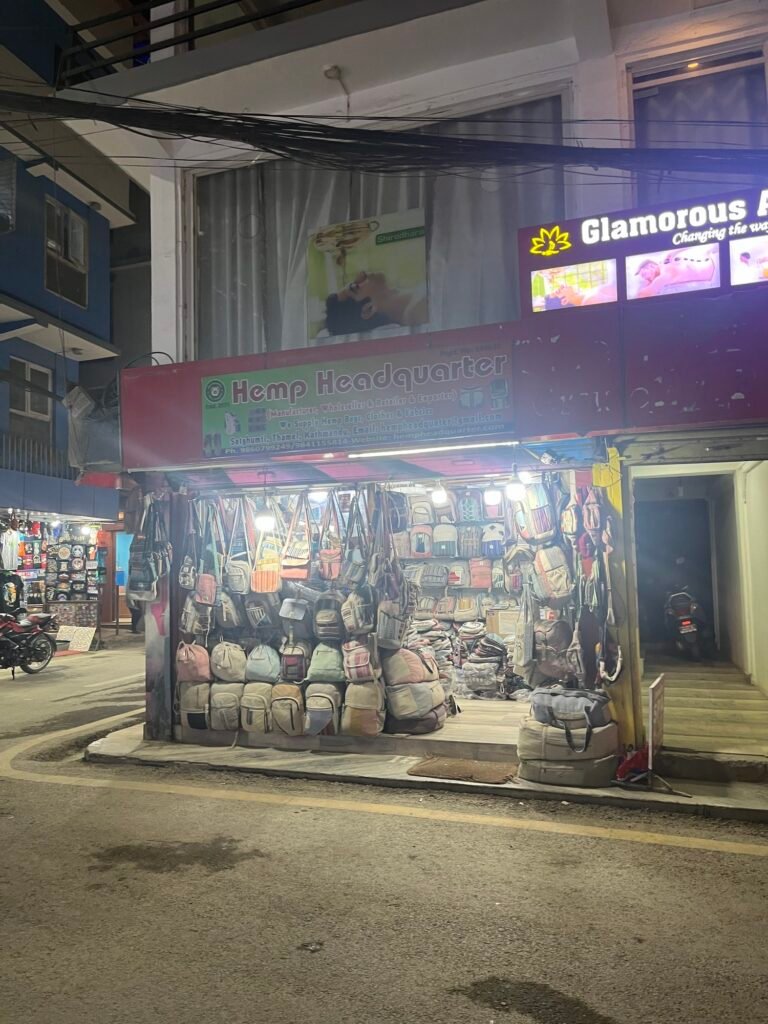
A hemp shop in Thamel — mostly bags, not jackets.

We spent a few weeks walking into hemp shops across Kathmandu to see what was already being made. Almost all of it was the same jacket: a zip, a hood, a winter cut. Very little of it was pure hemp — most was a blend, usually with cotton, sometimes without saying so.

Nobody was making a chore jacket in handwoven hemp. That gap is the reason Run One exists.

What the Shops Said About Weight

One shop owner told us pure handwoven hemp runs at least 300gsm, and realistically 350–360. That’s secondhand, from a retailer rather than a weaver, and we’ve treated it as a starting point rather than a number.

The Swatches

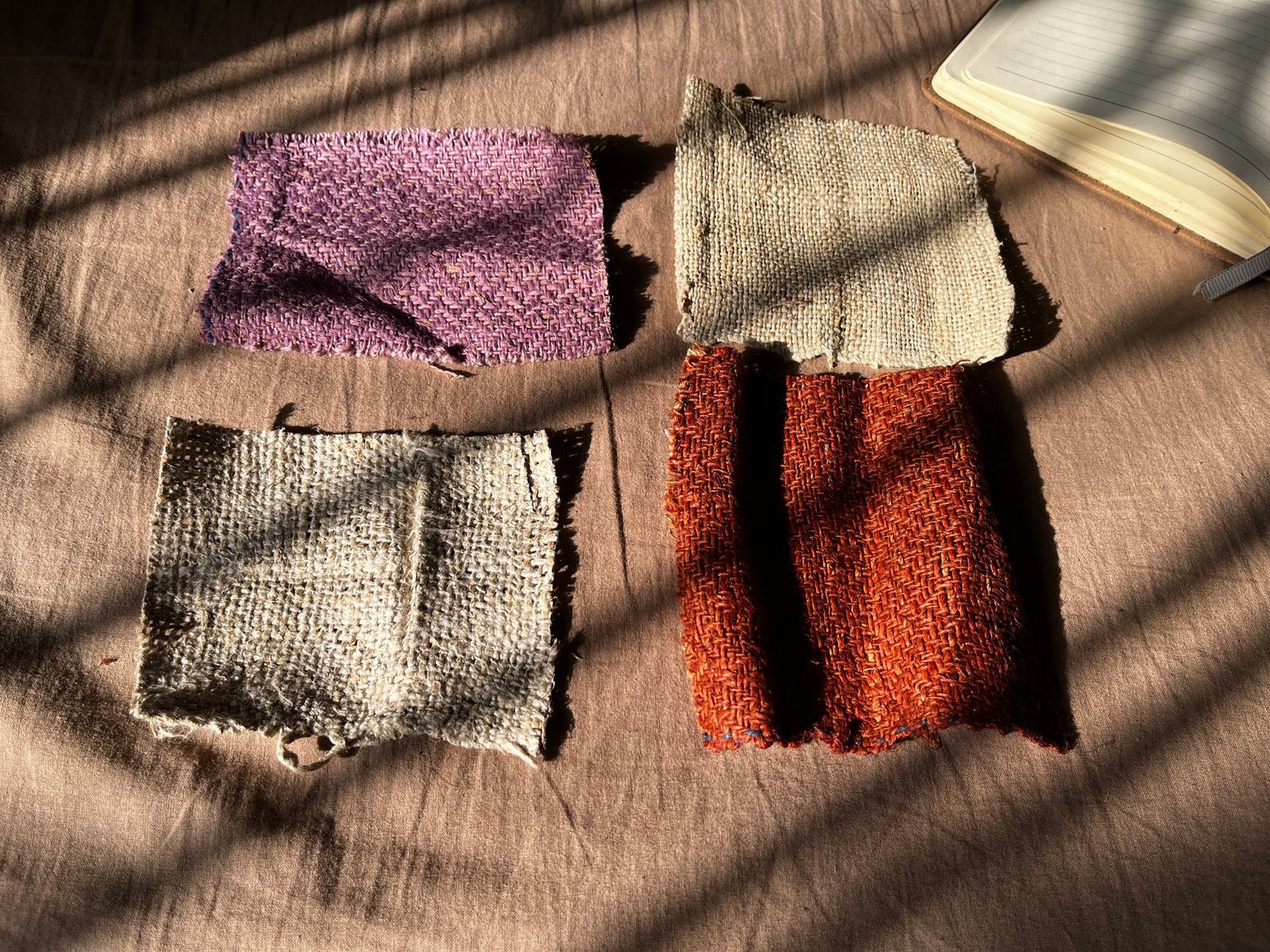
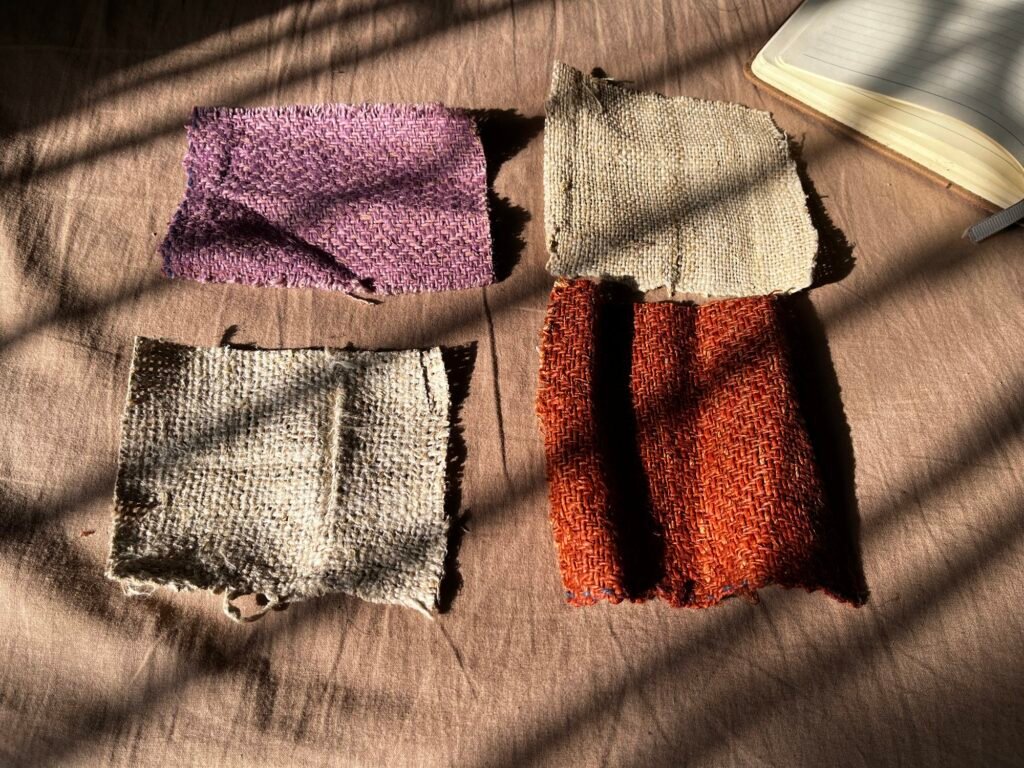
Shop 1 gave us four options: two dyed, in a pattern they call “zigzag weave” — visually it reads closest to a twill or herringbone, though the shopkeeper’s English wasn’t enough to confirm the exact technical term, so we’re not stating that as fact. And two undyed in plain weave, one of which is wood-ash treated. It basically means that these wild harvested hemp from the mountain is boiled in wood ash to make it softer.

The supplier confirmed the ash treatment directly — it’s genuinely part of their process, not something we’re guessing at. It’s noticeably softer in the hand, entirely handwoven and costs more due to the additional processes and labor intensive production.

We’re using the plain, untreated, undyed option for Run One. No dye, because it’s a step that adds cost, adds a thing that can fade, and hides what the fibre actually looks like. Not the ash-treated version either, for now — we don’t yet understand enough about what the treatment does to the fibre over time to build it into a ten-year claim, and that’s a question for the next visit, not a guess we’re comfortable publishing.

Top left/Bottom right: dyed zigzag-weave swatches, purple and rust. Bottom left: undyed plain weave, wood-ash treated — confirmed by the supplier, softer to the touch. Top right: undyed plain weave, untreated — the one we’re using.

The First GSM Test, and why We’re not Quoting the Number

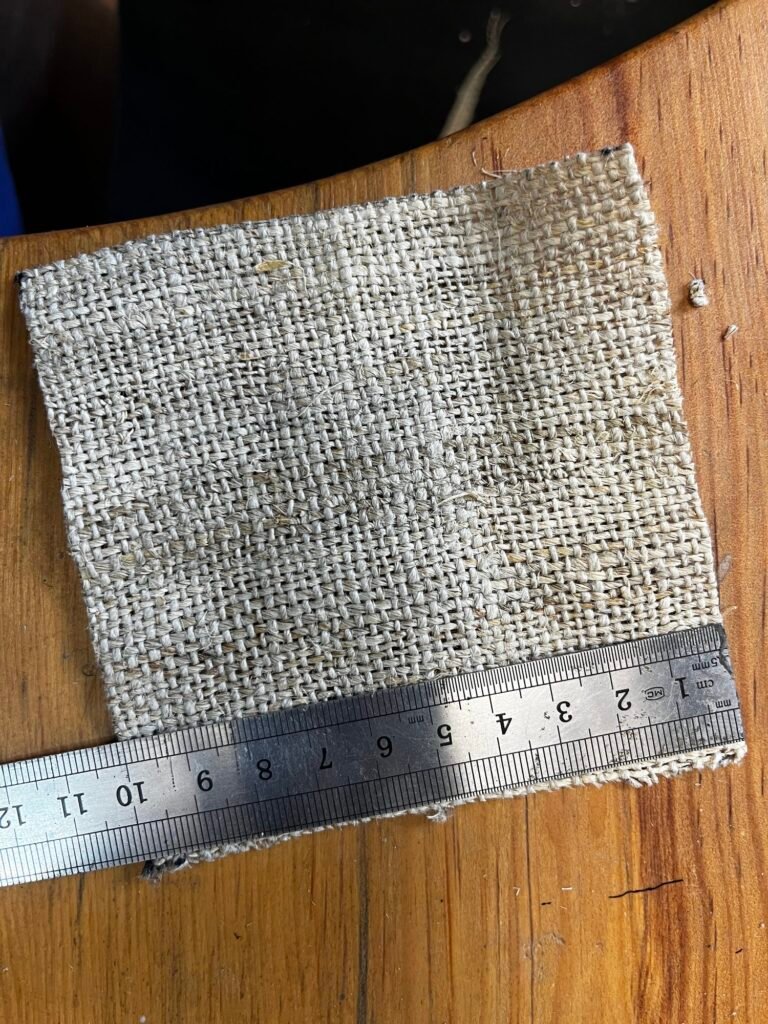
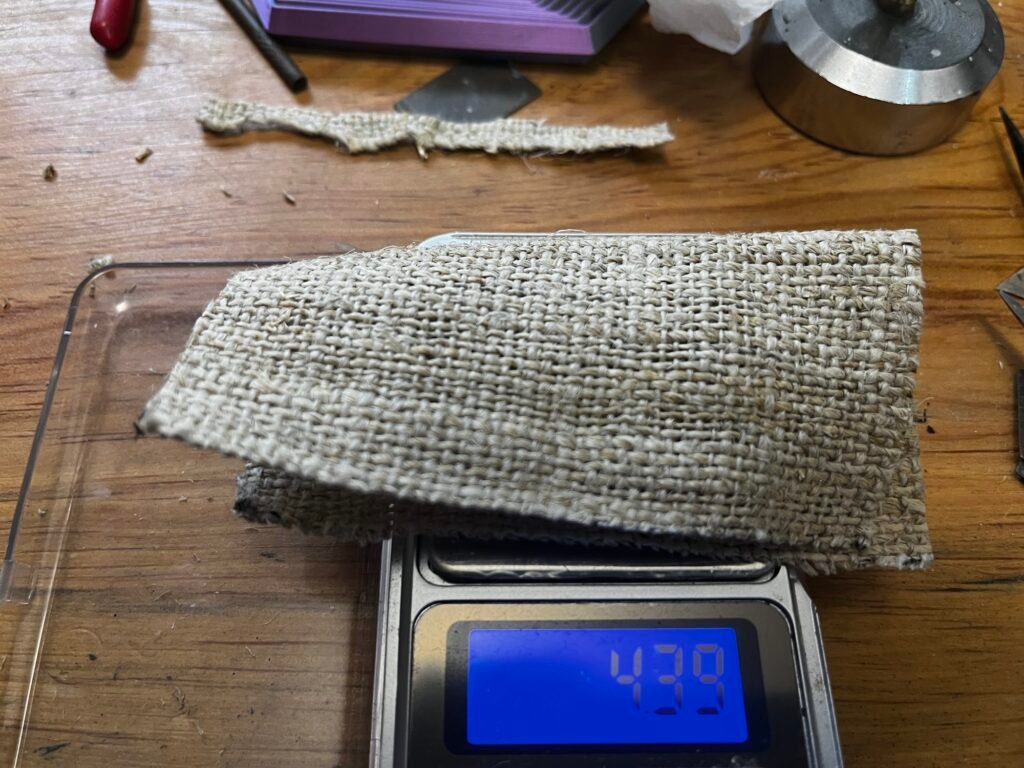
We ran a rough check at home on a 0.01g scale: the swatch weighed 4.39g. Assuming a clean 10cm × 10cm square, that works out to about 439gsm — well above what the shop had quoted.

The swatch on hand wasn’t a clean 10cm square — the first sign this test needed redoing properly.
First GSM reading (4.39gm) — from an irregular cut, so treated as inconclusive rather than final.

We don’t trust that number, and the reason is visible in the photo: the swatch wasn’t actually 10cm square. It ran past that mark on one edge, which means the true area was larger than we assumed — and the same weight over a larger area means a lower real GSM. The 439 figure is almost certainly too high; we just don’t know by how much yet.

There’s a second reason to be cautious, one that would apply even to a perfectly cut square: hand-tensioned weaving means density drifts across a bolt, so one square only ever tells you about that square.

The proper version takes several squares from different parts of the same batch, averaged, with the spread reported alongside. We’ll run that for both suppliers once we have swatches from each, and publish the range as well as the average — the variation is a real property of hand-woven cloth, not an error to hide.

One thing we can’t solve: the batch we test may not be the batch that gets cut. Hemp moves through these workshops faster than a sample takes to approve. So the test tells you what this workshop’s cloth typically runs, and we’ll test the actual Run One yardage separately once it’s bought.

Where This Goes Next

Supplier 2 has been visited once, briefly. No swatches yet.

Supplier 1 has the brief and is making the first sample.