
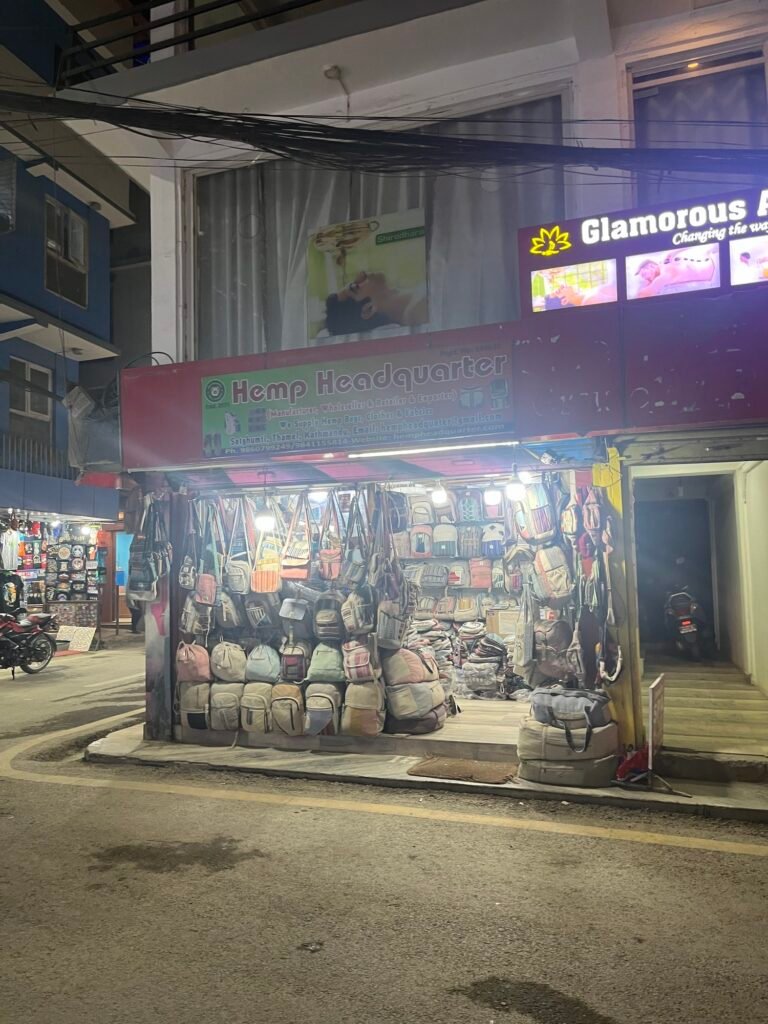
We spent a few weeks walking into hemp shops across Kathmandu to see what was already being made. Almost all of it was the same jacket: a zip, a hood, a winter cut. Very little of it was pure hemp — most was a blend, usually with cotton, sometimes without saying so.
Nobody was making a chore jacket in handwoven hemp. That gap is the reason Run One exists.
What the Shops Said About Weight
One shop owner told us pure handwoven hemp runs at least 300gsm, and realistically 350–360. That’s secondhand, from a retailer rather than a weaver, and we’ve treated it as a starting point rather than a number.
The Swatches
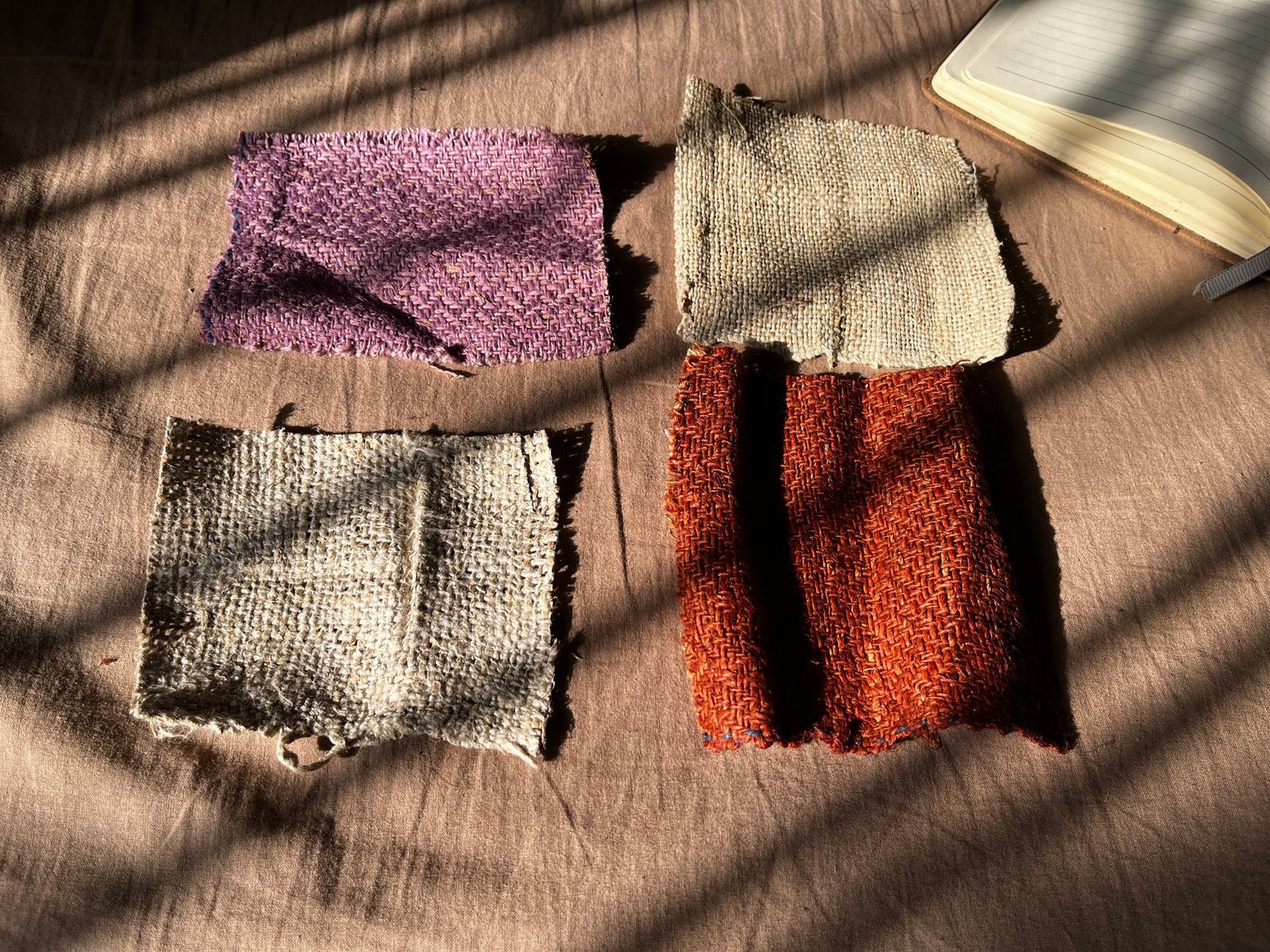
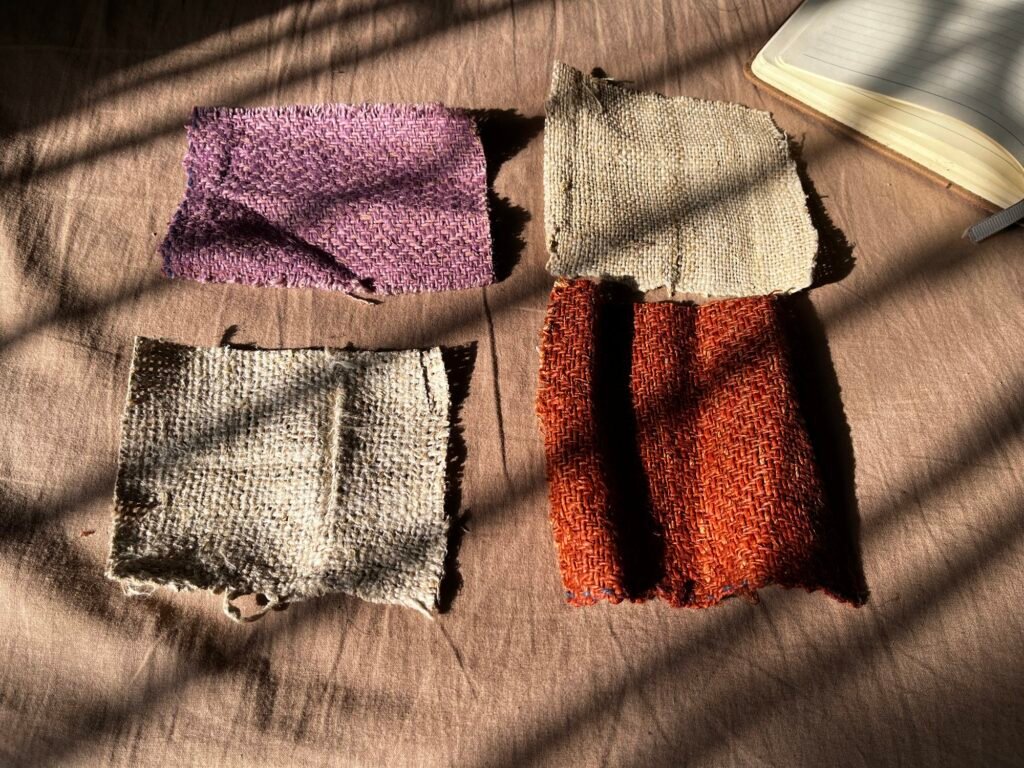
Shop 1 gave us four options: two dyed, in a pattern they call “zigzag weave” — visually it reads closest to a twill or herringbone, though the shopkeeper’s English wasn’t enough to confirm the exact technical term, so we’re not stating that as fact. And two undyed in plain weave, one of which is wood-ash treated. It basically means that these wild harvested hemp from the mountain is boiled in wood ash to make it softer.
The supplier confirmed the ash treatment directly — it’s genuinely part of their process, not something we’re guessing at. It’s noticeably softer in the hand, entirely handwoven and costs more due to the additional processes and labor intensive production.
We’re using the plain, untreated, undyed option for Run One. No dye, because it’s a step that adds cost, adds a thing that can fade, and hides what the fibre actually looks like. Not the ash-treated version either, for now — we don’t yet understand enough about what the treatment does to the fibre over time to build it into a ten-year claim, and that’s a question for the next visit, not a guess we’re comfortable publishing.
The First GSM Test, and why We’re not Quoting the Number
We ran a rough check at home on a 0.01g scale: the swatch weighed 4.39g. Assuming a clean 10cm × 10cm square, that works out to about 439gsm — well above what the shop had quoted.
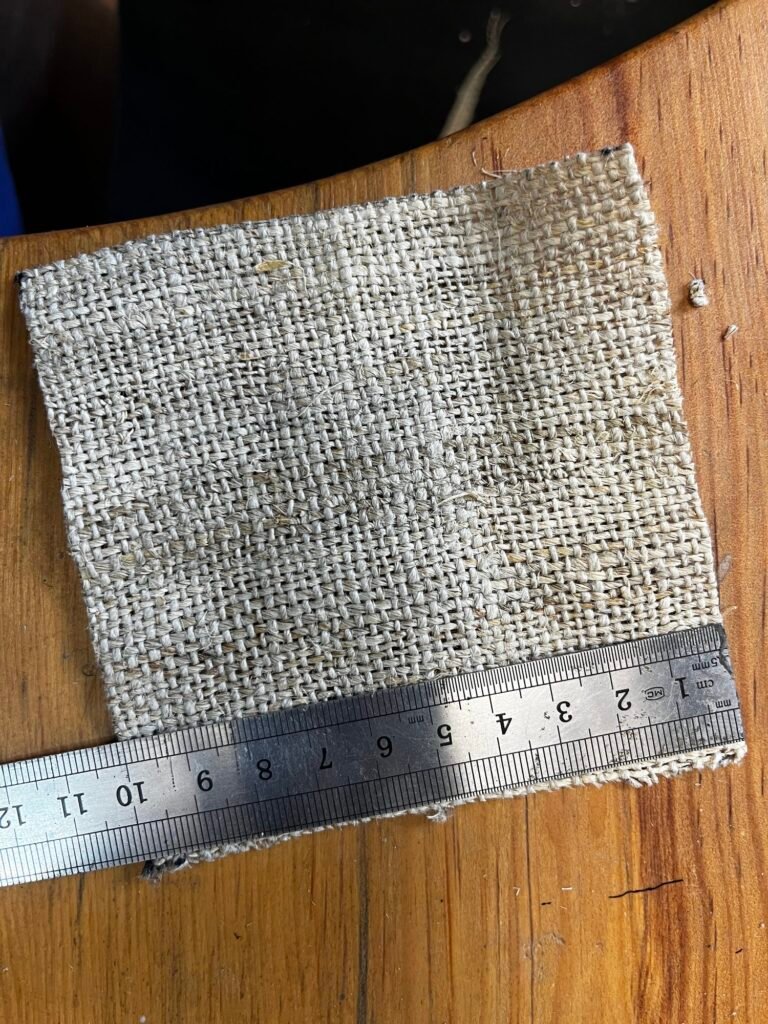
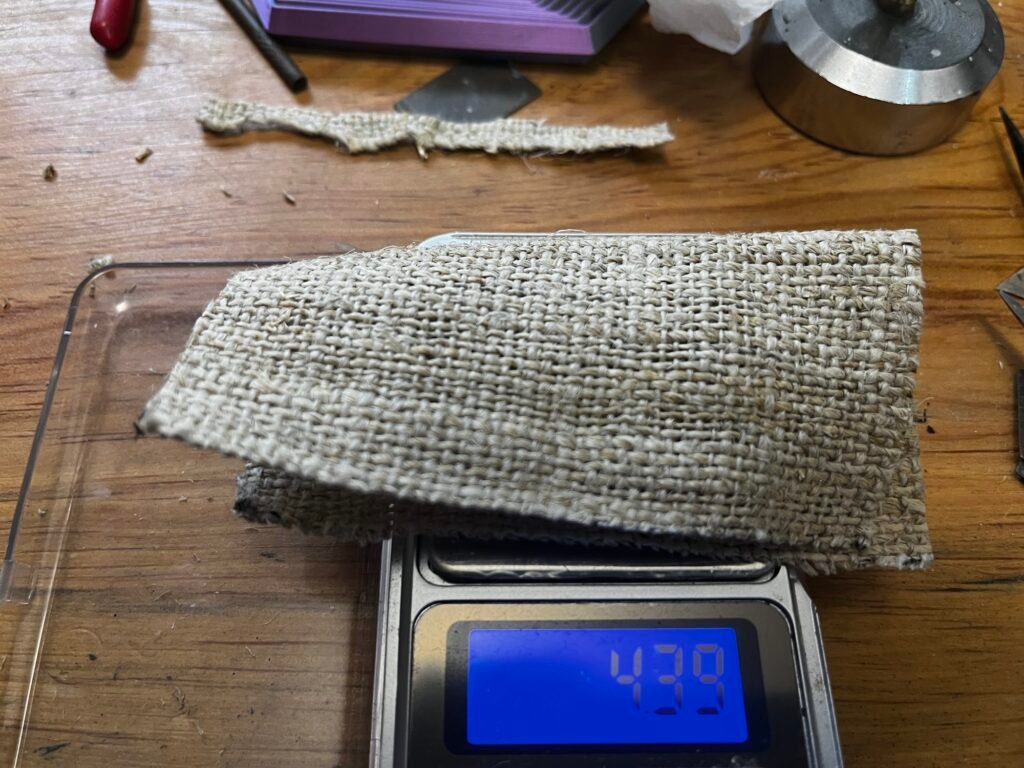
We don’t trust that number, and the reason is visible in the photo: the swatch wasn’t actually 10cm square. It ran past that mark on one edge, which means the true area was larger than we assumed — and the same weight over a larger area means a lower real GSM. The 439 figure is almost certainly too high; we just don’t know by how much yet.
There’s a second reason to be cautious, one that would apply even to a perfectly cut square: hand-tensioned weaving means density drifts across a bolt, so one square only ever tells you about that square.
The proper version takes several squares from different parts of the same batch, averaged, with the spread reported alongside. We’ll run that for both suppliers once we have swatches from each, and publish the range as well as the average — the variation is a real property of hand-woven cloth, not an error to hide.
One thing we can’t solve: the batch we test may not be the batch that gets cut. Hemp moves through these workshops faster than a sample takes to approve. So the test tells you what this workshop’s cloth typically runs, and we’ll test the actual Run One yardage separately once it’s bought.
Where This Goes Next
Supplier 2 has been visited once, briefly. No swatches yet.
Supplier 1 has the brief and is making the first sample.